Skip to content
CC

HUB 03 · Toaster Ovens

The Best Toaster Ovens for Reflow Soldering

This one is settled by arithmetic rather than opinion. Lead-free SAC305 paste is reflowed at a published 240 to 245°C peak — 464 to 473°F — and almost every countertop oven sold publishes a ceiling of 450°F. Three ovens in our catalog clear the number. Leaded paste is a different and much easier answer.

By Stephen V.Updated How we rank
#ad

We earn a commission if you buy through our links. It does not change the price you pay, and it does not decide our picks — the scoring rubric is published in full, including what disqualifies an oven. How this works.

The short answer

Quick picks

#OvenBest forScorePrice
01
Nuwave Nuwave Bravo XL Pro Air Fryer Toaster Oven (30 Qt, with probe)
Nuwave Bravo XL Pro Air Fryer Toaster Oven (30 Qt, with probe)

The most oven around a probe for the money

1,800 W
7.7
$219.99Amazon
02
Panasonic Panasonic FlashXpress Toaster Oven (NB-G110P)
Panasonic FlashXpress Toaster Oven (NB-G110P)

The best-specified small oven here

1,300 W
7.8
$124.99Amazon
03
Breville Breville Joule Oven Air Fryer Pro (BOV950BSS)
Breville Joule Oven Air Fryer Pro (BOV950BSS)

The connected version of the best-documented oven here

1,800 W
8.3
$499.95Amazon
04Wattage not published
6.9
$249.99Amazon

#ad · Prices pulled live from the Amazon Product API, last checked October 11, 2026. Where we have no verified live price we show none — we would rather leave a gap than print a number that has gone stale. The wattage column is what the manufacturer publishes; “not published” means exactly that, and we have not estimated one. Scores are ours, compiled from published specifications, and are not test results.

The short version

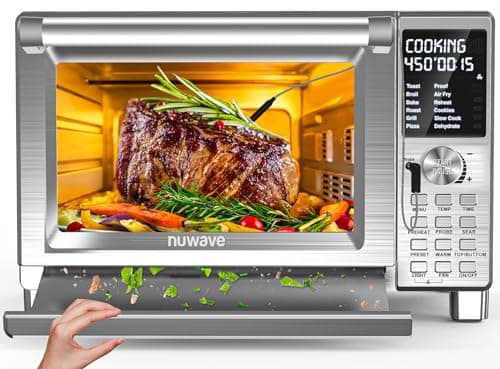
The pick is the Nuwave Bravo XL Pro, because it is the only oven in our catalog that publishes both a 500°F ceiling — 260°C, with real headroom over the 240 to 245°C peak a published lead-free profile calls for — and a set-point resolution of 5°F steps, which is 2.8°C and the finest published step size anywhere here. It also publishes a 50°F floor, interior and exterior dimensions and four rack levels. It is for someone reflowing lead-free paste who wants to set a number and read it back off a panel.

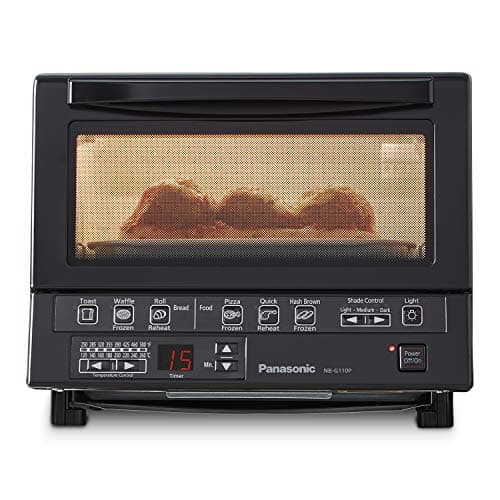
The Panasonic FlashXpress (NB-G110P) is second and is the better oven on mechanism: it publishes the same 500°F ceiling in a 7.2-quart cavity using twin infrared elements and no fan, which is the fastest-responding heat in this catalog. The reflow reference we read for this page names “IR (radiant infrared)” as a valid reflow heat source alongside forced convection, so that is not an analogy. Its published floor is 250°F, the highest here, and 7.2 quarts limits you to small boards.

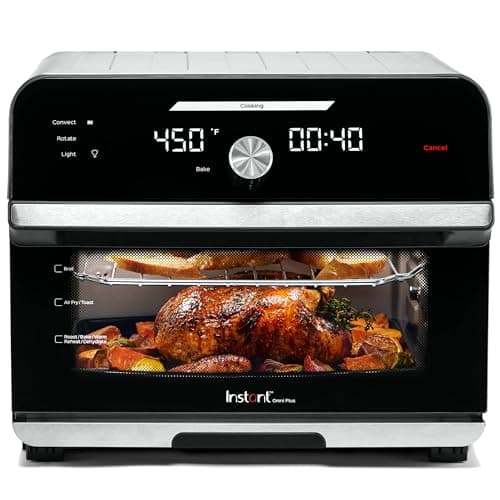
If you solder with leaded paste, every oven in this category is a candidate, and the cheapest competent one wins. Eutectic Sn63/Pb37 melts at a published 183°C (361°F) and the conventional profile peaks at 210 to 230°C (410 to 446°F), capped under 235°C (455°F) — all of which sits inside the 450°F ceiling almost everything here publishes. That is why the Instant Pot Omni Plus is on this page at number four despite a 450°F ceiling that rules out lead-free entirely.

Two things we are not going to do. We have reflowed no boards in any of these ovens — there is no lab behind this site, same as there is no test kitchen, and the rubric says so. And we are not going to tell you any of these ovens is suitable for reflow: not one manufacturer in this catalog publishes a word about soldering, and a food appliance used for flux is a food appliance no longer. The honest scope of this page is narrow and stated below.

The number the whole page turns on

A reflow profile is a published curve, not a temperature. The technical reference we read for this page — Advanced Energy's reflow note, which states compliance with IPC/JEDEC J-STD-020 — prints both of the profiles a hobbyist would use. For the lead-free paste it recommends, Sn/Ag/Cu (SAC305):

Published stageFigure as publishedIn Fahrenheit
Ramp upmax. 3°C/sec—
Preheat150~200°C for 100~140 sec302~392°F
Liquidus217°C423°F
Time above liquiduslimited to 90 sec—
Peak240~245°C464~473°F
Ramp downmax. 4°C/sec—

And for a conventional tin-lead process, the same document states that peak reflow temperatures are limited to less than 235°C (455°F), that the eutectic solder melts at 183°C (361°F), and that the profile peaks at 210~230°C (410~446°F) for about five seconds after a 140~180°C preheat.

Now put every published oven ceiling in our catalog against those two numbers:

OvenPublished rangeCeiling in °CReaches SAC305 peak (240~245°C)?
Nuwave Bravo XL Pro50–500°F, 5°F steps260°CYes, with 15°C of headroom
Panasonic FlashXpress250–500°F260°CYes, with 15°C of headroom
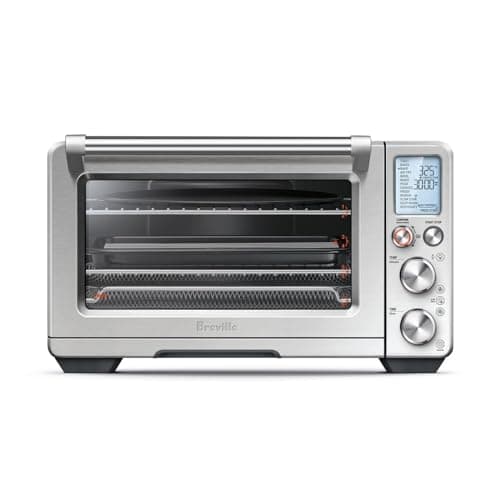
Breville BOV95080–480°F249°CYes, by 4°C
Instant Pot Omni Plus170–450°F232°CNo — 8 to 13°C short
Our Place Wonder Oven Pro80–450°F232°CNo
Our Place Wonder Oven / Large200–450°F232°CNo
Hamilton Beach Sure-Crisp 31403200–450°F232°CNo
Proctor Silex 31260200–450°F232°CNo
Breville BOV680120–445°F (Bake & Roast)229°CNo
Every other oven we coverNo range publishedUnknownNot knowable

That is the finding, and it is unusually clean for this category: 450°F is the de facto ceiling of the countertop oven market, 450°F is 232°C, and 232°C is above the 217°C liquidus but below the 240~245°C peak. So a 450°F oven will melt lead-free paste and will not take it through the profile the standard describes. For leaded paste the same 450°F ceiling is comfortably sufficient, with the published cap at 235°C sitting just above it.

What none of these ovens can do, stated plainly

The profile above is not only a peak. It specifies a ramp rate (max 3°C per second up, 4°C down), a soak window (150~200°C for 100~140 seconds) and a hard limit on time above liquidus (90 seconds). Meeting those requires knowing the temperature at the board, continuously, and being able to change the element duty in response.

Not one oven in this catalog publishes a ramp rate. Not one has a thermocouple readout, a programmable profile, or any published statement about how quickly it heats. The Nuwave's probe sounds like the answer and is not: its published target range is 50°F to 212°F, which is a meat probe and tops out roughly 130°C below where this process lives. The Breville BOV950's app monitors a cook; it does not run a solder profile.

So the honest statement is this: these ovens can reach the temperatures, and cannot be shown to follow the curve. People who reflow seriously in a toaster oven add an external thermocouple and a controller that switches the elements, which turns the oven into a heat source with someone else's brain. Nothing on this page is sold that way, and nothing on this page is ranked on it — we rank what the makers publish.

Why the order is the order

1. Nuwave Bravo XL Pro. First because it publishes the two figures this job needs and nobody else publishes both: a 50 to 500°F range — 260°C of ceiling, 15°C clear of the SAC305 peak — in 5°F increments, the finest published set-point resolution in our catalog at 2.8°C a step. Nuwave also publishes inner dimensions of 14.50 by 13 by 7.625 inches, four rack levels, outer dimensions, weight and the warranty term. Against it: the 1,800-watt figure is a Nuwave support answer on the product page rather than a rating line in the manual, the probe is useless for this, and the warranty is one year and original-purchaser only. Head to head against the Breville flagship.

2. Panasonic FlashXpress (NB-G110P). The best-specified oven on this entire site and the right mechanism for the job: twin infrared elements and no fan, a published 250–500°F band, and power, voltage, frequency, capacity and exact millimetre dimensions all published by Panasonic. Radiant infrared is named in the reflow reference itself as a valid heat source, and no fan means nothing is blowing small parts around. Second rather than first on two published limits: a 250°F floor — the highest here, so there is no low soak — and 7.2 quarts of cavity, which caps board size hard. It is also expensive for its size. Full review here.

3. Breville Joule Oven Air Fryer Pro (BOV950).On the page because of the most complete published spec sheet in the catalog — 1,800 W off the rating line in Breville's own instruction book, one cubic foot of interior, a published 80 to 480°F range, exact dimensions, weight, thirteen functions and a two-year warranty. That 480°F is 249°C, which clears the 245°C top of the peak window by four degrees and nothing more; it is the narrowest pass on this page and we are not going to describe four degrees as headroom. Its 80°F floor is the lowest published floor here, which is genuinely useful for a soak. Against it: every mechanical figure Breville publishes for it is identical to the cheaper BOV900, and the premium is an app. Full review here, and against the BOV900 here.

4. Instant Pot Omni Plus. The leaded-paste pick, and explicitly not a lead-free one. Instant Brands publishes a 170–450°F range and a 19 QT / 18 L interior — one of the few ovens in this category to state its volume in litres at all — which makes it the largest published cavity on this page by a distance and the cheapest route to a usable board area. 450°F is 232°C: fine for the 210~230°C leaded peak, and 8 to 13°C short of the lead-free one. Against it: Instant Brands publishes no wattage anywhere we could find, so it gets no running-cost figure from us and no density figure either. Full review here.

Before you do this at all

Three things that are not product recommendations and are the most important paragraphs on the page.

Do not use a reflow oven for food again. Flux residue, solder dust and whatever is in the board laminate are not things to bake a potato next to. Everyone who does this treats the oven as dedicated equipment from the first board onward, and it is the single reason the cheap, high-ceiling oven is often the right buy rather than the well-built one you would want in a kitchen.

Ventilate. Reflow produces fumes that a kitchen extractor is not sited to catch and that a countertop oven is not designed to contain. For what it is worth on the kitchen side of this question, no manual we have read requires a hood for cooking — which tells you nothing about soldering, and that is the point.

No manufacturer here endorses this. Not one of the thirty-four ovens in our catalog publishes a statement about soldering, reflow, or any non-food use. Running one outside its published purpose is outside its warranty and outside its safety certification, and every oven on this page carries a one or two-year warranty that this would void. We are reporting published temperature figures against a published process figure. That is the entire claim.
In detail

The picks, in full

01
Nuwave Nuwave Bravo XL Pro Air Fryer Toaster Oven (30 Qt, with probe)

The most oven around a probe for the money

Nuwave Bravo XL Pro Air Fryer Toaster Oven (30 Qt, with probe)

Interior dimensions publishedWattage from a brand Q&A answer, not the manual
7.7/10

A 30-quart, four-rack-level convection oven with an integrated temperature probe that stops the cook at a set internal temperature, and a maker that publishes its interior and exterior dimensions, weight, capacity, temperature range and warranty term — most of which the Ninja probe ovens do not. The 1,800-watt figure comes from a Nuwave support answer on its own product page rather than the manual's rating line, and we say so.

Power
8
Usable space
9
Footprint
6
Documentation
7
Value
8.5

What it gets right

  • An integrated probe that stops the oven at a target between 50°F and 212°F — per the manual, not a preset that merely displays a reading
  • Nuwave publishes both outer and inner dimensions, weight, capacity and a 50–500°F range; its own FAQ states a standard 13 x 9 x 3 inch pan fits
  • Four rack levels in a 30-quart cavity — Nuwave's own figures are a 10 lb chicken or two 13-inch pizzas — for well under either probe-equipped Ninja

What it doesn't

  • The 1,800 W figure is a Nuwave support answer on the product page, not a rating line in the manual or a row in the spec table
  • 12 functions plus 100 recipe presets is deep into the territory where the count is marketing
  • One-year limited warranty, valid only for the original purchaser and only in the continental US per the manual

What it costs to run

About 33.0¢ an hour at full draw, or $60.25 a year at 30 minutes a day, 365 days a year and 18.34¢ per kWh.

1,800 W ÷ 1000 × 182.5 h × 18.34¢ = $60.25

1800 watts, or 15 amps, as stated by Nuwave in its own answer (dated 06/30/2026) to a customer question on the Bravo XL Pro product page. The model 20813 owner's manual and the page's specification table give the supply as 120 V but print no wattage, so this is brand-supplied rather than a rating-plate reproduction. This is an upper bound: the elements cycle off once the cavity is at temperature, and no manufacturer publishes a duty cycle, so we compute at full rated draw rather than invent a correction factor. The full method is published.

Skip this if…

…you do not roast to an internal temperature. Everything this oven does better than a cheaper 30-quart box is the probe and the four rack levels; if you mostly air fry vegetables and reheat, a smaller oven with a rating-plate wattage is the better-documented buy.

$219.99on Amazon

Price last checked October 11, 2026. Prices move constantly — Amazon's at checkout is the one that counts.

#ad · we may earn a commission from this link to Nuwave Bravo XL Pro Air Fryer Toaster Oven (30 Qt, with probe)

02
Panasonic Panasonic FlashXpress Toaster Oven (NB-G110P)

The best-specified small oven here

Panasonic FlashXpress Toaster Oven (NB-G110P)

Fully specified by the manufacturerSmall interior
7.8/10

The most completely documented oven on this entire site relative to its size: 1,300 W, 120 V, 60 Hz, 7.2 quarts, 250–500°F, exact millimeter dimensions and a stated weight. Panasonic publishes all of it, and almost nobody else does.

Power
7
Usable space
5
Footprint
9.5
Documentation
10
Value
7.5

What it gets right

  • Panasonic publishes power, voltage, frequency, capacity, temperature range, dimensions and weight — the complete set, which no other brand here manages
  • 1,300 W and infrared elements means no preheat in the usual sense
  • 500°F ceiling in a 7.2-quart cavity is a genuinely high heat density

What it doesn't

  • 7.2 quarts is small — four slices, and a 9-inch pizza is optimistic
  • The infrared elements are not adjustable in the way a multi-element oven's are
  • Expensive for its size, and you are paying partly for the engineering discipline

What it costs to run

About 23.8¢ an hour at full draw, or $43.51 a year at 30 minutes a day, 365 days a year and 18.34¢ per kWh.

1,300 W ÷ 1000 × 182.5 h × 18.34¢ = $43.51

1300 W at 120 V / 60 Hz, published by Panasonic as a power consumption figure with the supply conditions stated — the most complete electrical specification of any oven on this site. This is an upper bound: the elements cycle off once the cavity is at temperature, and no manufacturer publishes a duty cycle, so we compute at full rated draw rather than invent a correction factor. The full method is published.

Skip this if…

…you need to cook for more than two. This is a beautifully specified small oven and it is still a small oven; no amount of documentation adds capacity.

$124.99on Amazon

$149.9917% off

Price last checked October 11, 2026. Prices move constantly — Amazon's at checkout is the one that counts.

#ad · we may earn a commission from this link to Panasonic FlashXpress Toaster Oven (NB-G110P)

03
Breville Breville Joule Oven Air Fryer Pro (BOV950BSS)

The connected version of the best-documented oven here

Breville Joule Oven Air Fryer Pro (BOV950BSS)

Wattage published in the manualSame published specs as the cheaper BOV900
8.3/10

Mechanically the Smart Oven Air Fryer Pro with a radio in it. Every figure Breville publishes for the two — 1,800 watts, a cubic foot of interior, 21.4 x 17.3 x 12.7 inches, 38.89 pounds, 80 to 480°F, thirteen functions — is identical, and the premium buys the Joule app, Autopilot guided cooking and voice control. Nothing about the heat changes.

Power
9.5
Usable space
9.5
Footprint
6
Documentation
10
Value
6.5

What it gets right

  • The most complete published spec sheet on this site: rated power, interior volume, exterior dimensions, weight, temperature range, capacity and warranty term all stated by Breville in one place, with the rating plate reproduced in the manual
  • 80°F is the lowest published temperature floor of any oven in our catalog that publishes a range at all, and 480°F the highest ceiling — holding a low set point is harder than getting hot
  • The Joule app adds guided step-by-step cooking, progress monitoring and Alexa or Google voice control, which is a genuine capability the rest of the category does not offer

What it doesn't

  • Every mechanical figure Breville publishes is identical to the cheaper BOV900 — same 1,800 W, same 21.4 x 17.3 x 12.7 inches, same cubic foot, same 38.89 lb, same 80–480°F, same thirteen functions
  • Tied with the BOV900 for the largest published footprint in our catalog: 21.4 inches wide and 17.3 deep before you add door clearance
  • The connected features need a phone or tablet — Breville's own note specifies Bluetooth 4.0 and iOS 13 or Android 8 and later — so an oven bought for the app stops being one if the app stops

What it costs to run

About 33.0¢ an hour at full draw, or $60.25 a year at 30 minutes a day, 365 days a year and 18.34¢ per kWh.

1,800 W ÷ 1000 × 182.5 h × 18.34¢ = $60.25

120 V ~ 60 Hz 1800 W is the Rating Information line printed in Breville's own BOV950 instruction book, not a marketing headline. This is an upper bound: the elements cycle off once the cavity is at temperature, and no manufacturer publishes a duty cycle, so we compute at full rated draw rather than invent a correction factor. The full method is published.

Skip this if…

…you are not going to cook from your phone. Take the connectivity away and this is the BOV900 at a higher price: every wattage, dimension, capacity, weight and temperature figure Breville publishes for the two is the same number.

$499.95on Amazon

Price last checked October 11, 2026. Prices move constantly — Amazon's at checkout is the one that counts.

#ad · we may earn a commission from this link to Breville Joule Oven Air Fryer Pro (BOV950BSS)

04
Instant Brands Instant Pot Omni Plus 19QT/18L Toaster Oven Air Fryer, 10-in-1

Rotisserie without a separate machine

Instant Pot Omni Plus 19QT/18L Toaster Oven Air Fryer, 10-in-1

Interior volume publishedNo published wattage
6.9/10

One of the few ovens here that publishes its interior in liters, which makes it the easiest in the category to compare on paper. The rotisserie is a genuine mechanical addition rather than a relabeled fan setting.

Power
5
Usable space
8.5
Footprint
6.5
Documentation
7
Value
7.5

What it gets right

  • 18 liters stated plainly, so you can compare it to a Breville's cubic foot without converting a marketing claim
  • A published temperature range, which is rarer than it should be and matters if you proof dough
  • The rotisserie spit is real hardware, not a preset

What it doesn't

  • Instant Brands publishes no wattage on the product page, so this oven gets no running-cost figure from us
  • 450°F is a low ceiling — several ovens here reach 500°F, which matters for pizza and for a hard finish on roast vegetables
  • Rotisserie is the kind of feature that gets used twice

What it costs to run

Instant Brands publishes no wattage for this oven in any document we could find, so we do not show a running-cost figure for it. We are not going to estimate one from a similar model. Here is the method we would have used.

Skip this if…

…you bake pizza at high heat. The published ceiling is 450°F, and that is fifty degrees short of where a thin crust actually wants to be.

$249.99on Amazon

Price last checked October 11, 2026. Prices move constantly — Amazon's at checkout is the one that counts.

#ad · we may earn a commission from this link to Instant Pot Omni Plus 19QT/18L Toaster Oven Air Fryer, 10-in-1

How to check an oven against your own paste

Get the profile off the paste manufacturer's datasheet rather than a forum, and read three numbers out of it: the liquidus (the temperature the alloy melts), the peak window, and the time above liquiduslimit. Then convert the peak to Fahrenheit — multiply by 1.8 and add 32 — and compare it to the oven's published ceiling, not to its highest preset label.

Two rules of thumb that fall straight out of the arithmetic. A published 450°F ceiling is 232°C: enough for eutectic Sn63/Pb37, not enough for SAC305. A published 500°Fceiling is 260°C: enough for either, with genuine margin. Anything between — Breville's 480°F is the only example in our catalog — passes on paper by a handful of degrees and leaves you depending on an oven holding its set point exactly, which no manufacturer in this category will commit to in writing.

Why we will not rank these on speed

The useful question for reflow is not how hot an oven gets but how fast it gets there and how precisely it can be held, and that is exactly what this category refuses to publish. There is no ramp-rate figure, no thermostat tolerance, no element-response data and no thermocouple output on any oven we cover. The nearest published proxies are heat density — watts per published quart, which we compute for the nine ovens where both figures exist on the reheating page— and the set-point step size, where Nuwave's published 5°F is the only figure of its kind in the catalog. Two proxies is what the evidence supports, so two proxies is what this page uses.

How we picked

Ovens we claim to have cooked in: 0

Everyone in this category tells you they roasted forty chickens. We have roasted none, and we say so. Here is what we do instead: read the manufacturer's manual and spec sheet, record the published wattage, interior volume, temperature range and warranty term, work out what the oven costs to run for an hour and for a year, show the arithmetic so you can redo it with your own electricity rate, and cite all of it. Where a brand publishes no wattage, we print no running cost rather than borrowing a number from a similar model. Prices come live from Amazon's API and disappear rather than go stale.

The scores above are judgments from that documented research — not test results. One of the five metrics is Documentation: whether the manufacturer will tell you what its oven draws at all. The full rubric, including what disqualifies an oven, is published in full.

Questions

Frequently asked

Can you reflow solder in a toaster oven?
You can reach the temperatures in some of them, and that is a narrower statement than it sounds. A published lead-free SAC305 profile peaks at 240~245°C (464~473°F), and only three ovens in our catalog publish a ceiling that reaches it — the Nuwave Bravo XL Pro and Panasonic FlashXpress at 500°F (260°C) and the Breville BOV950 at 480°F (249°C). What no oven here can do is follow the rest of the profile: none publishes a ramp rate, and none has a thermocouple readout. No manufacturer in this category endorses soldering in its oven, and an oven used for flux should not go back to food.
What temperature do you need for reflow soldering?
For lead-free SAC305, the published profile we read specifies a preheat of 150~200C for 100~140 seconds, a 217C liquidus, a peak of 240~245C and time above liquidus limited to 90 seconds -- that peak is 464~473F. For a conventional tin-lead process the same document caps peak reflow temperature under 235C (455F), with a 210~230C peak and a 183C eutectic melting point. The practical consequence is that a 450F oven covers leaded paste and falls 8 to 13C short of lead-free.
Is 450F hot enough for reflow soldering?
For leaded paste, yes, comfortably. For lead-free, no. 450°F is 232°C, which is above the 217°C liquidus — the paste will melt — but below the 240~245°C peak the published profile calls for. Since 450°F is the ceiling almost every countertop oven in this category publishes, lead-free work pushes you to the small number of ovens publishing 480 or 500°F. Every published ceiling we hold is here.
Which toaster oven has the highest temperature?
Two publish 500°F, which is the highest figure anywhere in our catalog: the Panasonic FlashXpress (published band 250–500°F) and the Nuwave Bravo XL Pro (50–500°F in 5°F steps). The Breville BOV950 publishes 480°F. Everything else that publishes a range at all tops out at 450°F or below, and roughly two-thirds of the ovens we cover publish no temperature range whatsoever.
Do you need a controller and thermocouple?
If you want to meet the published profile rather than just melt the paste, yes. The profile specifies a ramp rate (max 3C per second up, 4C down), a soak window and a 90-second cap above liquidus, and none of that can be managed without reading the temperature at the board and switching the elements in response. No oven in this catalog publishes a ramp rate, carries a thermocouple readout or accepts a profile. The Nuwave's probe does not substitute: its published target range stops at 212F.
Can you use the oven for food afterwards?
Treat it as dedicated equipment from the first board. Flux residue and solder dust are not things to cook beside, no manufacturer in this category publishes any guidance on decontaminating a cavity, and using an oven outside its published purpose sits outside its warranty and its safety certification. That is also why the sensible buy for this is often a cheap oven with a high published ceiling rather than the best-built one — the opposite of what our main ranking would tell you.

Keep reading

Receipts

Sources

We have not cooked in these ovens and we do not pretend to have. Specifications come from the manufacturer's own published documents; electricity rates come from the US Energy Information Administration; prices come from the live Amazon API. Where a figure is not published, the page says “not published” rather than guessing. Read the full method.