The check to do before anything else
Residence halls set their own rules on cooking appliances, and toaster ovens are often on the list they restrict. The recipient will know their policy; ask, or ask a parent who has read the housing contract. If the answer is no, this guide still applies to the off-campus year — a first apartment is where most of these ovens end up — but do not ship one to a dorm on the assumption that it is allowed.
Why wattage leads this ranking
A student outlet is shared with a kettle, a microwave, a laptop charger and whatever the roommate owns. Most full-size air fryer ovens draw 1,800 watts — fifteen amps, the entire rating of a standard circuit — and that is the number most likely to trip something in a shared kitchen. The ovens at the top of this page publish 1,100 and 1,400 watts, which leaves headroom. We tabulate every published wattage in the catalog; where a brand publishes none, we say so rather than guess.
The order
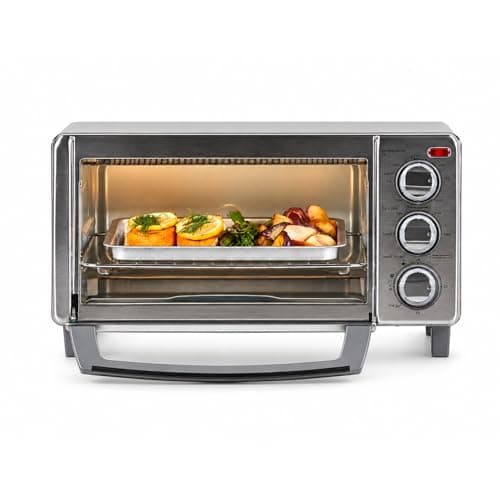
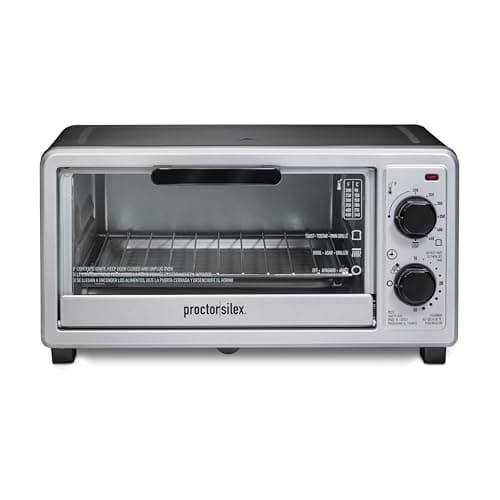
The Proctor Silex 31260 leads. It is the cheapest oven on this site, it publishes 1,100 watts, it has three knobs and nothing electronic to fail, and it carries a three-year limited warranty — which is longer than a degree. It does not have a fan and it preheats slowly; for toast, reheating and the occasional frozen pizza in a shared kitchen, none of that matters.
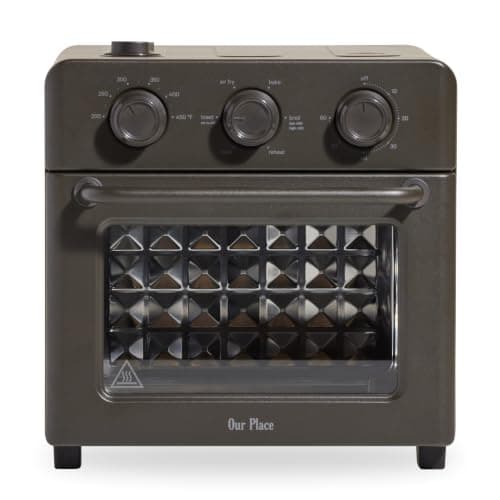
The Our Place Wonder Oven is second and is the pick if the recipient actually wants to air fry. It is 11.5 inches wide, draws a published 1,400 watts — about a fifth less per hour than the 1,800-watt norm — and Our Place publishes everything we score documentation on, down to interior dimensions. It is small (four slices, a 9-inch pizza), the floor is 200°F and the timer stops at an hour, and none of the accessories is dishwasher-safe. The review covers all of that.
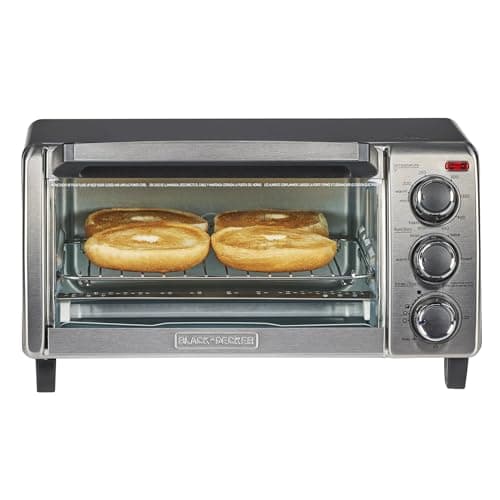
The BLACK+DECKER TO1785SGis third: 1,150 watts, four slices, a two-year warranty, all published on BLACK+DECKER's own page. It is the documented budget pick across this whole site, and in a student kitchen its lack of a fan is a smaller loss than its low draw is a gain.
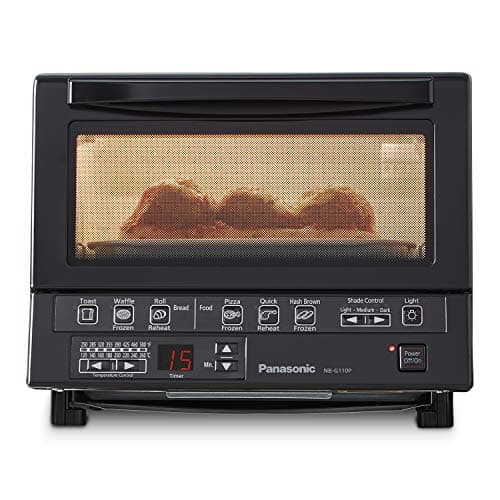
The Panasonic FlashXpress is fourth and is the upgrade gift: 1,300 watts published with the supply conditions, 7.2 quarts, a 500°F ceiling, and infrared elements that need no preheat in the usual sense. It costs roughly three times the Proctor Silex, and it is still a four-slice oven. Give it to the student who cooks properly for one.
The BLACK+DECKER TO1313SBD is fifth: four slices, three knobs, and no published wattage, which is the only reason it sits below the Proctor Silex. It toasts and it melts cheese, and it costs very little.
Who each one is for
- A first-year student with a shared kitchen: the Proctor Silex.
- A student who has said the word “air fryer”: the Wonder Oven.
- A parent who wants the documented, warrantied option: the TO1785SG.
- A graduate student who cooks for one every night: the Panasonic.
What to check before you buy it for them
The policy, as above. The counter: a foot of clear space is realistic; everything on this page fits it. The outlet: if the kitchen is old, the two lowest-draw picks are the safe ones; here is the circuit arithmetic. And the move: students move every year. Knobs survive a car boot better than glass panels do.
How we picked
Ovens we claim to have cooked in: 0
Everyone in this category tells you they roasted forty chickens. We have roasted none, and we say so. Here is what we do instead: read the manufacturer's manual and spec sheet, record the published wattage, interior volume, temperature range and warranty term, work out what the oven costs to run for an hour and for a year, show the arithmetic so you can redo it with your own electricity rate, and cite all of it. Where a brand publishes no wattage, we print no running cost rather than borrowing a number from a similar model. Prices come live from Amazon's API and disappear rather than go stale.
The scores above are judgments from that documented research — not test results. One of the five metrics is Documentation: whether the manufacturer will tell you what its oven draws at all. The full rubric, including what disqualifies an oven, is published in full.