The short answer
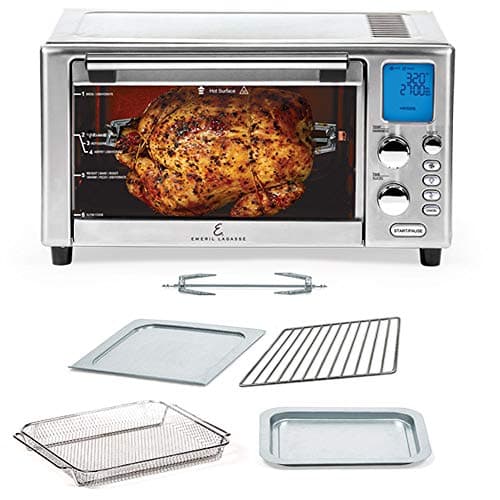
The Everyday 360 is a mid-price air fryer oven whose selling points are mechanical: a genuine rotisserie spit, a dehydrate mode and a full glass door across the front, in a design that has been on sale for years. That longevity is worth something real — parts and accessories are easy to find, and the failure modes are known. What you are not buying is current-generation controls or a documented electrical specification.
What the years on the market buy
A service history. Most ovens in this price band are recent SKUs with a thin track record; the Everyday 360 has been sold long enough that the people who own it have found whatever there is to find, and replacement trays and rotisserie parts are easy to source. For an appliance you intend to keep, that maturity is a quiet advantage over a newer oven with more presets and no history. The rotisserie is real hardware rather than a relabeled fan setting, and dehydrate is present — two functions that get used less often than the marketing implies but are genuinely useful when you want them.
The glass door earns its place
A full glass front lets you watch food brown without opening the oven and dumping its heat, which matters more day to day than any preset. Air frying in particular rewards checking on progress, and a clear door is the difference between catching fries at golden and finding them past it. It is the kind of plain, useful feature that a spec sheet undersells.
What Emeril never published
A wattage, an interior volume or a temperature range that we could find in any manufacturer document. So this oven gets no running-cost figure from us — the arithmetic on our air fryer oven electricity page needs a published watt figure, and we will not invent one to fill the cell. Almost everything verifiable about the Everyday 360 comes from listing copy and its long track record rather than a spec sheet, and for a mid-price appliance that is a fair thing to want more of. The celebrity name is on the box and in the price, which is worth naming plainly.
Who should skip it
Anyone who wants modern controls or a checkable specification. This is an older design and it feels like one; if a backlit panel and a published wattage matter to you, the Instant Omni Plus gives you a published interior and temperature range and its own rotisserie for similar money. But if you want a mature oven with a real rotisserie and a glass door, and you value a long parts supply over a spec sheet, the Everyday 360 is a sensible mid-price buy. See where it lands against the field in our rotisserie roundup.
How we picked
Ovens we claim to have cooked in: 0
Everyone in this category tells you they roasted forty chickens. We have roasted none, and we say so. Here is what we do instead: read the manufacturer's manual and spec sheet, record the published wattage, interior volume, temperature range and warranty term, work out what the oven costs to run for an hour and for a year, show the arithmetic so you can redo it with your own electricity rate, and cite all of it. Where a brand publishes no wattage, we print no running cost rather than borrowing a number from a similar model. Prices come live from Amazon's API and disappear rather than go stale.
The scores above are judgments from that documented research — not test results. One of the five metrics is Documentation: whether the manufacturer will tell you what its oven draws at all. The full rubric, including what disqualifies an oven, is published in full.