The rare comparison where both sides publish their numbers
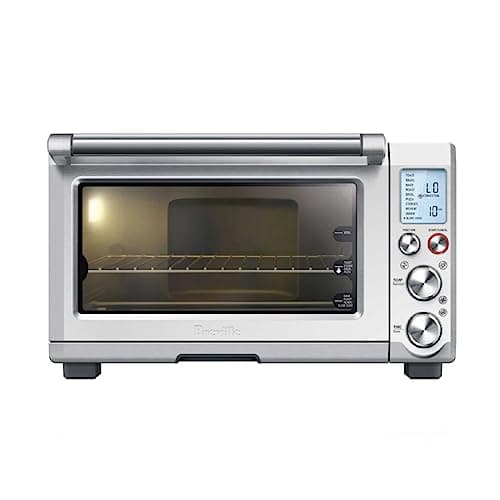
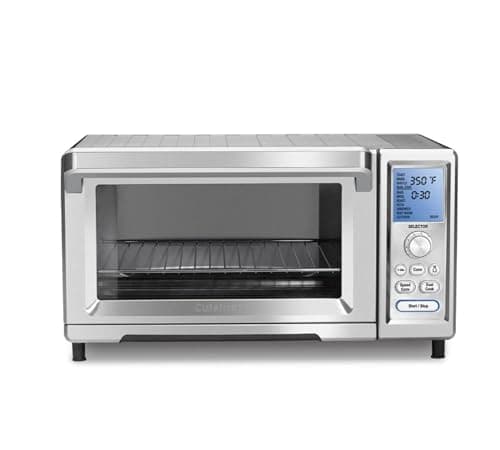
Most brands in this category leave you guessing; Cuisinart and Breville are the two that mostly do not, which is exactly why they are worth comparing directly. The Cuisinart Chef's Convection Toaster Oven (TOB-260N1) is the only oven on the site whose maker publishes both a wattage (1,800 W) and an interior volume (0.95 cubic feet) on the same page, with a stated list of what fits. The Breville Smart Oven Pro (BOV845) publishes its 1,800-watt rating on the product page and backs it with Element IQ, independently driven elements. Both draw the same power and cost the same to run, so the decision is about how they use that power, not how much.
Cuisinart's case: the best-documented interior
Depth of specification and depth of cavity. The TOB-260N1 gives you 0.95 cubic feet — within five percent of a Breville Pro's interior — for meaningfully less money, and fifteen functions including a genuine dual-cook mode that runs two temperatures in sequence. The catch is literal depth: at about 20.9 inches it is the deepest oven on the site, so measure your counter to the backsplash before its excellent interior wins you over. It is also listed as discontinued, so stock and price move around. Full Cuisinart review here.
Breville's case: control over the heat
The Smart Oven Pro is the range's convection oven with the air-fry layer removed, and its advantage is a published 120°F floor, a real slow-cook function and independently driven elements that push more heat from below early and less from above late. That element control is the one thing you cannot retrofit, and it is why the Breville bakes bread more evenly than a cavity of the same size with two elements switched together. It publishes no interior volume for this model, so on raw stated space Cuisinart wins the paper argument. Full Breville review here.
The decision rule
Buy the Cuisinart if you want the most published, checkable interior for the money and your counter is deep enough to take it. Buy the Breville if you bake bread and pastry and want the element control and the published 120°F floor, and can live without a published cubic-foot figure. If baking bread is the whole reason you are buying, the Breville's temperature control edges it — we rank both on exactly that.
Both halves of this comparison now have a page of their own. The Breville line ranked against itself answers which model to buy once the brand is settled, and the Cuisinart linedoes the same on the other side — including the awkward detail that the only Cuisinart oven here with a genuine manufacturer specification page is the one Cuisinart lists as discontinued. If the answer turns out to be neither brand, the alternatives page sorts the rest of the field by which Breville property you were actually paying for.
How we picked
Ovens we claim to have cooked in: 0
Everyone in this category tells you they roasted forty chickens. We have roasted none, and we say so. Here is what we do instead: read the manufacturer's manual and spec sheet, record the published wattage, interior volume, temperature range and warranty term, work out what the oven costs to run for an hour and for a year, show the arithmetic so you can redo it with your own electricity rate, and cite all of it. Where a brand publishes no wattage, we print no running cost rather than borrowing a number from a similar model. Prices come live from Amazon's API and disappear rather than go stale.
The scores above are judgments from that documented research — not test results. One of the five metrics is Documentation: whether the manufacturer will tell you what its oven draws at all. The full rubric, including what disqualifies an oven, is published in full.