HUB 05
Running Costs & Power
This is the part of the category that is simply missing. Appliance publishers list a wattage and stop; energy sites do the arithmetic but name no models. Here both happen on the same page, with the rate cited and the sum written out so you can redo it with your own bill.
We earn a commission if you buy through our links. It does not change the price you pay, and it does not decide our picks — the scoring rubric is published in full, including what disqualifies an oven. How this works.
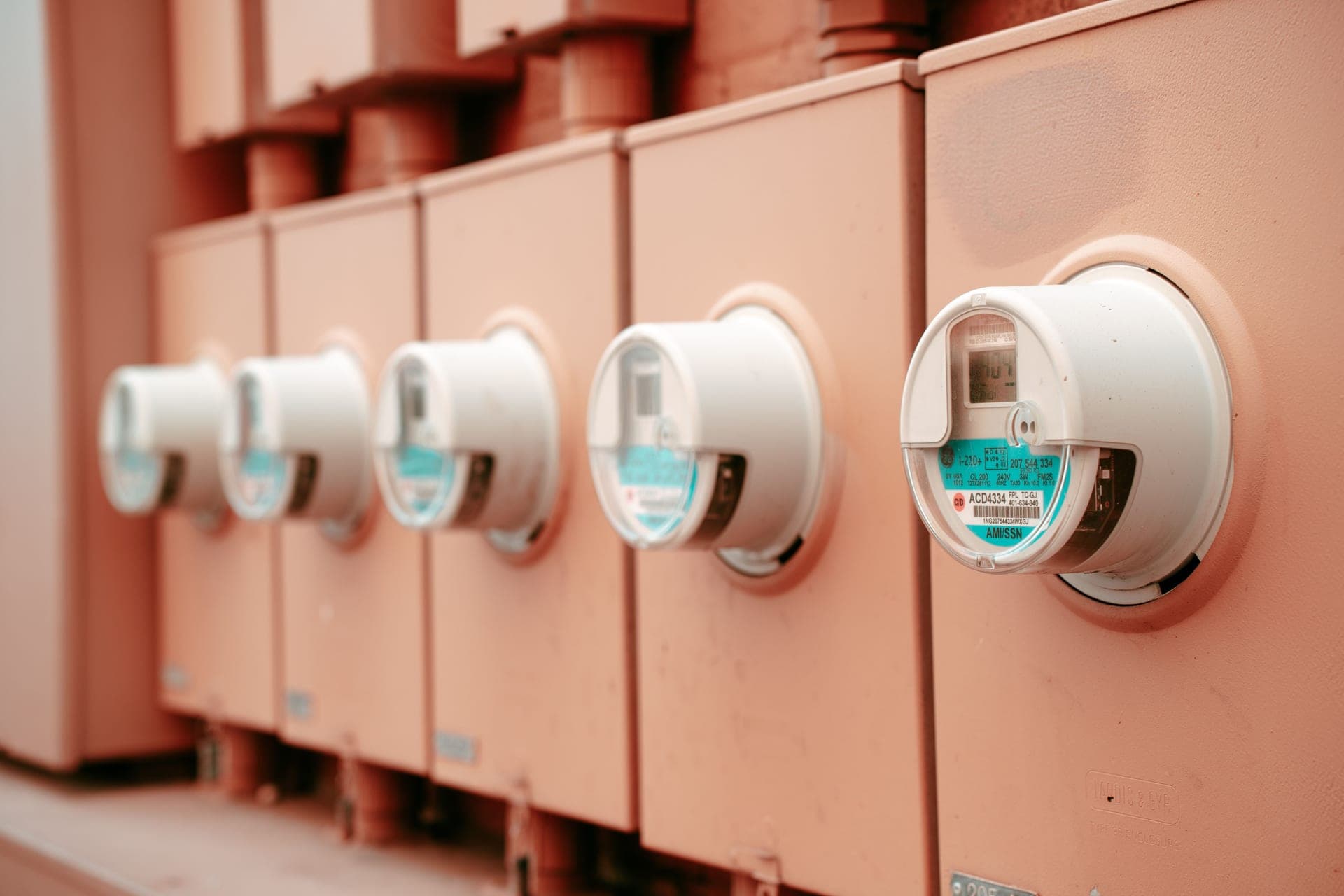
The number this whole category leaves out
Appliance publishers print a wattage in a spec table and never mention it again. Energy sites explain how to convert watts to dollars and name no products. In between those two is the question an actual buyer has — what will this specific oven cost me to run? — and almost nobody answers it. That gap is the reason this section exists.
The arithmetic, in full
There is no trick to it, which is precisely why it is strange that nobody publishes it. Power in watts, divided by 1,000, gives kilowatts. Kilowatts multiplied by hours gives kilowatt-hours. Kilowatt-hours multiplied by your electricity rate gives dollars.
Why every oven here draws the same power
A standard US kitchen branch circuit is 15 amps at 120 volts. 15 × 120 = 1,800 watts, which is the entire capacity of that circuit. A countertop oven that drew more would trip the breaker in a normal kitchen, so manufacturers design right up to that line and stop.
The result is that a $400 Breville and a $108 Cuisinart both draw 1,800 W and therefore both cost about 33.0¢ an hour to run. The premium oven is not more efficient. It cannot be, because efficiency here is not a design variable — essentially all of the energy becomes heat inside the box either way. What you buy when you spend more is control over where that heat goes, not less of it.
There is one genuine exception, and it is at the bottom of the market rather than the top. Small four-slice ovens frequently run 1,100–1,300 W because they do not need more to heat a small cavity. Those really are cheaper per hour. Whether they are cheaper per meal depends on how much longer they take, and no manufacturer publishes that.
Rated draw is a ceiling, not a meter reading
Every figure on this site is computed at the full rated wattage, and every figure is therefore an upper bound. Real ovens do not draw their rating continuously: once the cavity reaches the set temperature the thermostat cycles the elements off and on to hold it, so a long bake at a low temperature can spend a large fraction of its time drawing almost nothing.
We could invent a duty-cycle factor and produce lower, friendlier-looking numbers. We do not, because no manufacturer publishes a duty cycle and a correction factor we made up would be exactly the kind of unsourceable number this site exists to avoid. A ceiling you can verify is worth more than an estimate you cannot.
What actually changes your bill
Time, and the size of the box. Not the badge. If you want to spend less running a countertop oven, the effective moves are: skip the preheat for anything that is not baked goods, use the smallest cavity that fits the food, and stop using the full-size wall oven for jobs that fit on a single tray. That last one is worth more than every other optimization combined, and we costed it out.
Your own rate matters more than any of this. 18.34¢ per kWh is the US average; residential rates range from roughly half that to more than double depending on the state and the tariff. Take the per-hour figure from any page here, divide by 18.34, and multiply by your own cents-per-kWh — every number on the site is built so that substitution works.
Two cases the arithmetic answers differently
The first is the microwave, which beats every oven on this site for reheating and loses on everything that needs a surface — the per-job comparison is here. The second is the long, low cook: drying food is cheap per hour and meaningful per session, because the session runs for eight or ten of them, and only two ovens in this catalog publish a floor and a timer that make it possible at all — which ones, and why a Dehydrate button is not evidence.
The same arithmetic, in Btu instead of cents
Every watt one of these ovens draws ends up as heat in the room it is standing in, and the EIA publishes the conversion that turns the figures on this hub into a comfort question rather than a money one: one kilowatthour is 3,412 Btu. Run that against every published wattage we hold and a half-hour countertop session puts somewhere between 1,877 and 3,071 Btu into your kitchen — which is why the lowest-wattage ovens on this site are the summer answer, and why a wall oven heating five cubic feet of air is several times worse on the same tray.
Two pairings where the spec sheets do not overlap
The most useful comparisons on this hub are the ones where two makers publish different things rather than different numbers. Panasonic against the small Breville is a fork rather than a price ladder: Panasonic publishes 250 to 500°F and Breville publishes 120 to 445, so neither band contains the other and the job you want decides it before the money does. And the Instant Omni Plus against the Ninja Foodi XL is the starkest case of a pattern this site keeps meeting: Instant publishes the interior volume and the temperature range and no wattage, Ninja publishes the wattage and no interior figure of any kind, so between two brands there is one complete specification and no row of the table is filled in twice.
Everything in this section
All of Running Costs & Power
Data
How Much Electricity Does a Toaster Oven Use?
A few cents an hour, with the sum written out. The method page every other running-cost page on the site links back to.
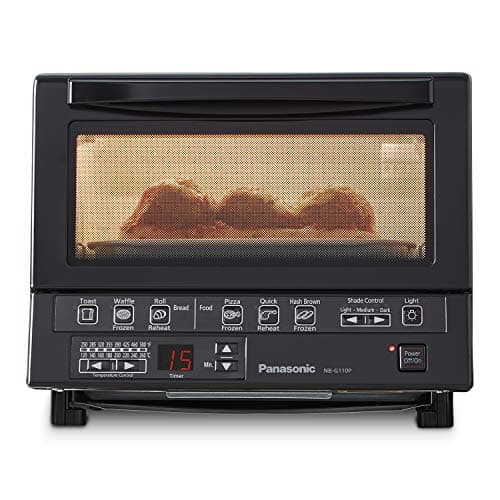
Covered here: Panasonic FlashXpress Toaster Oven (NB-G110P)
$149.99on Amazon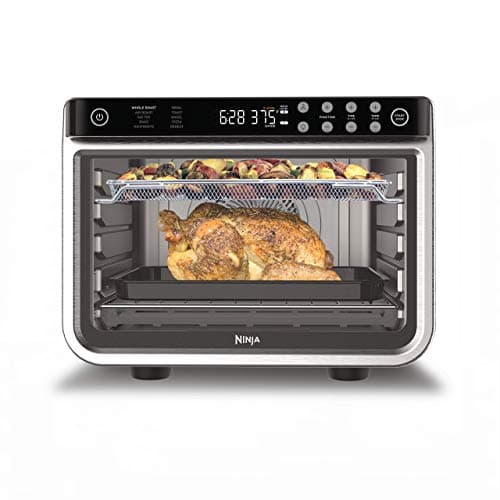
Data
Air Fryer vs Toaster Oven: Which Uses Less Electricity?
Both usually draw 1,800 W, so per hour they cost the same. The difference is time and cavity size — with the numbers.
Covered here: Ninja Foodi 10-in-1 XL Pro Air Fry Oven (DT201)
$379.99on Amazon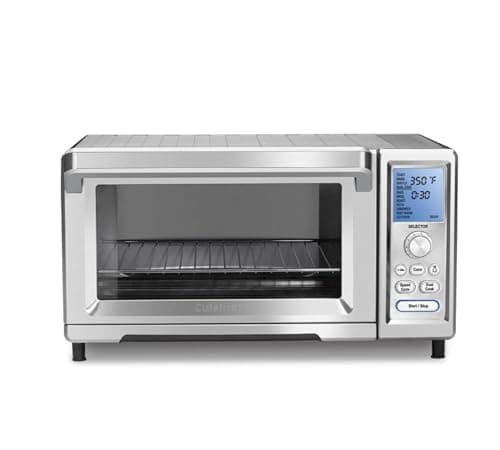
Data
Is a Countertop Oven Cheaper Than the Big Oven?
For a single tray, the countertop oven heats ~1 cu ft against ~5, so it wins clearly. The arithmetic, and where it flips.
Covered here: Cuisinart Chef's Convection Toaster Oven (TOB-260N1)
$299.95on Amazon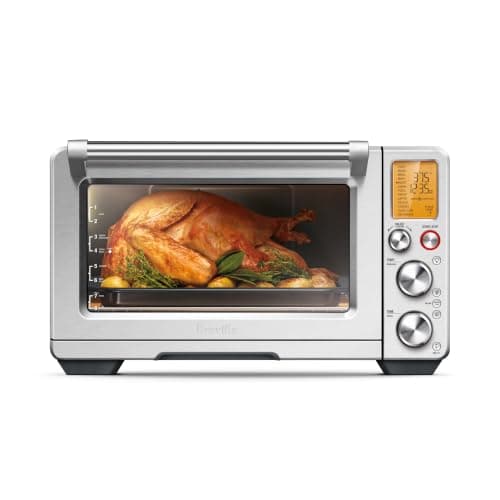
Data
Wattage and Running Cost, by Model
A reference table: published wattage, cost per hour and per year, for every oven that publishes a figure. The blanks are informative.
Covered here: Breville Smart Oven Air Fryer Pro (BOV900BSS)
$399.95on AmazonData
Does an Air Fryer Oven Use a Lot of Electricity?
A few cents an hour, and less than the big oven for the same food. The short answer to a high-volume worry, with the sum.
Covered here: Ninja Foodi 10-in-1 XL Pro Air Fry Oven (DT201)
$379.99on AmazonData
Air Fryer Oven vs Microwave: Electricity Cost
Similar wattage, very different runtime. A microwave reheats a portion for a fraction of an oven's energy because it heats only the food -- but it cannot crisp. The per-reheat sums, with every input shown.
Covered here: Panasonic FlashXpress Toaster Oven (NB-G110P)
$149.99on Amazon
Filed elsewhere, written for you
Also worth reading
These live under a different section of the site but answer the same question a running costs & power buyer is actually asking.
Air Fryer Toaster Ovens
The Best Air Fryer Toaster Ovens
Eight ovens ranked on watts, interior and live price. The Breville Pro wins on documentation; the Ninja DT201 wins on value.
Top pick: Breville Smart Oven Air Fryer Pro (BOV900BSS) · 8 ranked, 8 with live prices
$399.95on AmazonGuides & Answers
Can an Air Fryer Replace Your Oven?
Mostly yes for weeknight jobs on a single tray, and cheaper to run — no for large or delicate ones. The honest job-by-job split.
Covered here: Ninja Foodi 10-in-1 XL Pro Air Fry Oven (DT201)
$379.99on AmazonToaster Ovens
The Best Toaster Ovens
$50 to $200, ranked on what each price step buys. The Panasonic wins on documentation; the Cuisinart Custom Classic on plain 1,800 W value.
Top pick: Panasonic FlashXpress Toaster Oven (NB-G110P) · 6 ranked, 6 with live prices
$149.99on Amazon