What roasting asks of a countertop oven
Three things, in order: room for the food, a fan that moves heat evenly around it, and enough temperature control to hold the 375–425°F most roasts want. Roasting is the job a countertop convection oven does best, because it lets you brown a chicken or a sheet of vegetables without heating five cubic feet of wall oven for one dish — the running-cost argument for the whole category. This page ranks on published interior and even heat, because those are what decide whether a roast comes out browned all over rather than pale on one side.
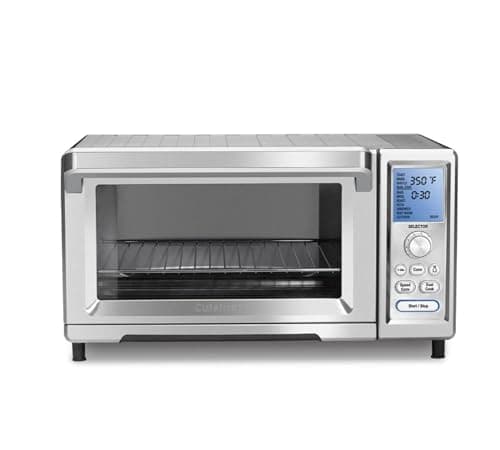
The Cuisinart Chef's Convection Toaster Oven (TOB-260N1) wins because it pairs the best-documented interior in the category — 0.95 cubic feet, published alongside its 1,800-watt rating — with a genuine dual-cook mode that runs two temperatures in sequence, which is exactly the control a roast that needs a hot start and a gentler finish rewards. Our full review is here.
Reading the order
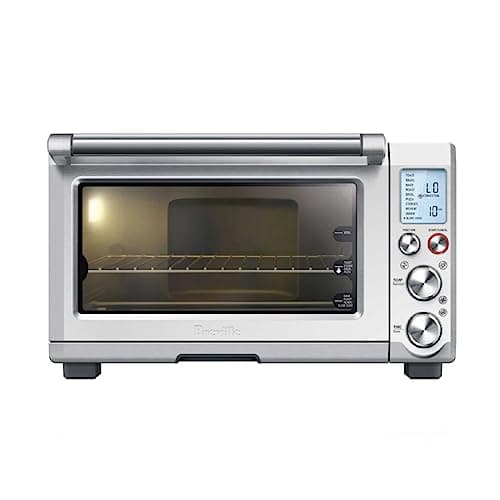
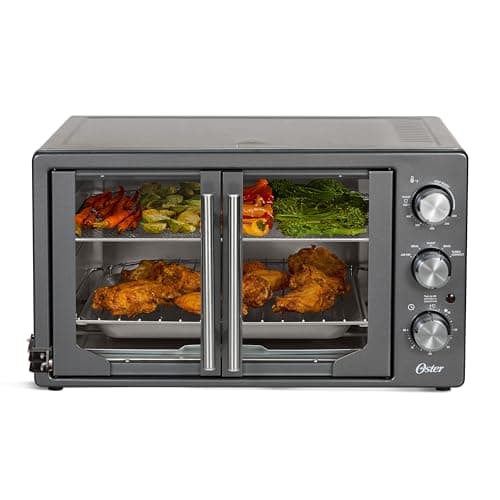
The Breville Smart Oven Pro (BOV845) is second and the even-heat pick: Element IQ drives its elements independently rather than switching them in banks, which moves heat to where a roast needs it and browns more evenly than a single-element oven. It publishes its 1,800-watt rating and, deliberately, has no air-fry basket — this is the convection oven of the range with the marketing layer removed. Its review is here. The Oster 42L French Door is third on raw room: 42 liters is enough for a whole bird, behind doors that need almost no clearance to open — the honest catch being that Oster publishes no wattage, so it gets no running-cost figure from us.
The interior-versus-control trade
Roasting rewards room, but not at any cost to control. The 42-liter Oster fits more food than the Cuisinart, yet it heats far more air — slower to temperature, more energy per use — and its controls are simpler. The Cuisinart and Breville hold temperature more precisely and publish more, which matters if you roast to a target rather than by eye. For a large bird a few times a year, the room wins; for weekly roasts of ordinary size, the control does. If you also bake bread, note that bread cares even more about a stable temperature floor than roasting does, which reshuffles this order.
How to choose
Start with the biggest thing you roast. If it is a whole turkey or two trays at once, take the room — the Oster, or the even larger French-door ovens in our under-$200 ranking. If it is a chicken, a joint or a sheet of vegetables, the Cuisinart or Breville browns more evenly and lets you check the specification before you buy. Every pick is judged from published specs and owner-reported behavior, not our own testing — how we judge is here — and the cost of running any of them is on our convection electricity page.
One job this page deliberately does not cover is the once-a-year bird. Roasting weekly and roasting a turkey are different purchases, and the deciding specification for the second is whether the manufacturer will print a poundage at all — exactly two of them do, and neither sells the biggest oven here.
How we picked
Ovens we claim to have cooked in: 0
Everyone in this category tells you they roasted forty chickens. We have roasted none, and we say so. Here is what we do instead: read the manufacturer's manual and spec sheet, record the published wattage, interior volume, temperature range and warranty term, work out what the oven costs to run for an hour and for a year, show the arithmetic so you can redo it with your own electricity rate, and cite all of it. Where a brand publishes no wattage, we print no running cost rather than borrowing a number from a similar model. Prices come live from Amazon's API and disappear rather than go stale.
The scores above are judgments from that documented research — not test results. One of the five metrics is Documentation: whether the manufacturer will tell you what its oven draws at all. The full rubric, including what disqualifies an oven, is published in full.