The category where less is often right
A toaster oven does one thing a full-size oven does badly: heat something small, fast, without warming the kitchen. At the bottom of this market that is exactly what you get, and for most households it is the correct purchase. This is the one hub on the site where the honest advice regularly points downward.
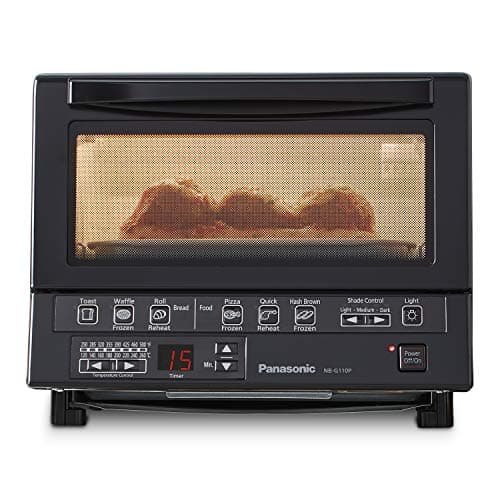
The Panasonic FlashXpress tops the list for an unusual reason: it is the most completely documented oven on the entire site relative to its size. Panasonic publishes the power draw, voltage, frequency, capacity, temperature range, dimensions and weight — the full set, which no other brand here manages. It is small, and you pay partly for the engineering discipline, but if you want to actually know what you bought, nothing else in the band competes.
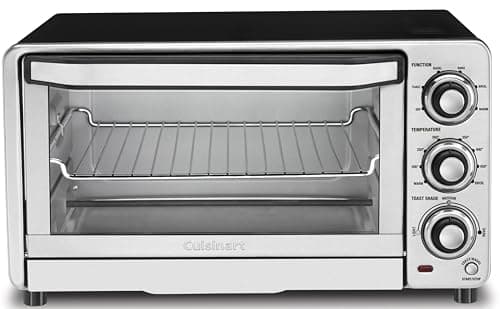
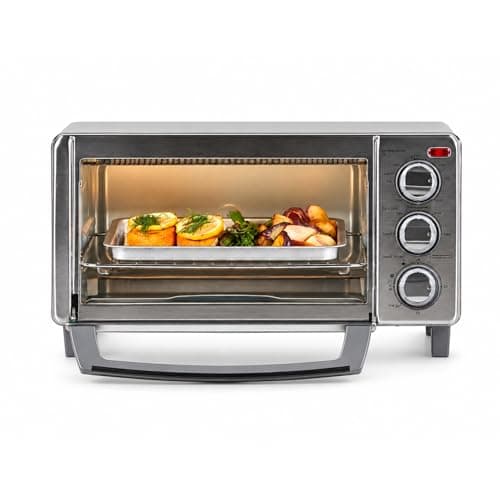
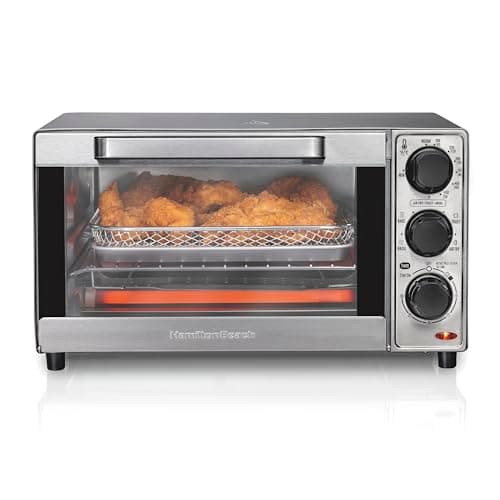
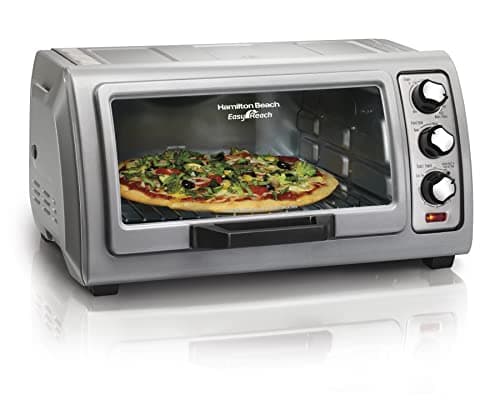
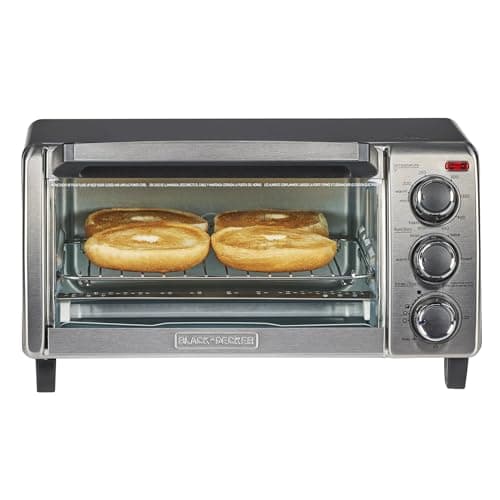
Below it, the ranking splits on what you want. The Cuisinart Custom Classic gives you a full 1,800 watts behind three knobs for well under half a Breville — nothing to fail electronically. The BLACK+DECKER TO1785SG is the documented budget pick, with a published 1,150 watts and a two-year warranty. The Hamilton Beach Sure-Crisp 4 Slice (31403) is the cheapest oven here with both a fan and a published figure — 1,120 watts on Hamilton Beach's own page — in a four-slice box. The Hamilton Beach Easy Reach earns its place on the roll-top door, the only genuinely different idea in the tier.
The one number that separates them
Wattage, at the bottom. A 1,150-watt oven costs less per hour than an 1,800-watt one and leaves real headroom on a shared kitchen circuit — but it preheats slower and cooks slower, so a cheaper hour is not automatically a cheaper meal. The full arithmetic is here. Above the budget tier every oven is 1,800 watts and they all cost the same to run, so the decision moves entirely to interior, controls and the door.
Two orderings of this band that are not this one
If the job is specifically toast — the thing the category is named after, and the thing almost nobody ranks on — the same ovens reorder around published toast documentation: slice count, darkness steps, the rack position the manual names, and whether toasting needs a preheat at all. The winner there is not the winner here, and it costs under a hundred dollars.
If the oven is for someone who will struggle with a hot drop-down door or a touch panel, the ranking that starts from the door and the controls is the one to read — and it weighs the published warranty term heavily, because it is the only durability figure any manufacturer in this category will commit to.
And if the air-fryer label is the part you want nothing to do with, the ovens whose own published function lists omit air fry are ranked separately — a field that turns out to hold the highest published temperature ceiling on this site, its only pan-fit claim that counts the handles, and its longest warranty term.
How we picked
Ovens we claim to have cooked in: 0
Everyone in this category tells you they roasted forty chickens. We have roasted none, and we say so. Here is what we do instead: read the manufacturer's manual and spec sheet, record the published wattage, interior volume, temperature range and warranty term, work out what the oven costs to run for an hour and for a year, show the arithmetic so you can redo it with your own electricity rate, and cite all of it. Where a brand publishes no wattage, we print no running cost rather than borrowing a number from a similar model. Prices come live from Amazon's API and disappear rather than go stale.
The scores above are judgments from that documented research — not test results. One of the five metrics is Documentation: whether the manufacturer will tell you what its oven draws at all. The full rubric, including what disqualifies an oven, is published in full.