What a dehydrate function actually requires
Not a button — a temperature. Dehydrating fruit, jerky or herbs means holding a low, even heat (roughly 130–170°F) for hours while a fan moves air across the food, so the two specs that matter are a published temperature floorlow enough to get there and enough interior to spread a batch on more than one level. A “dehydrate” label on the panel means nothing if the oven's lowest setting is 250°F, because that cooks the food instead of drying it. This page ranks on the published low-temperature floor first, and names where a maker states the function versus where it does not.
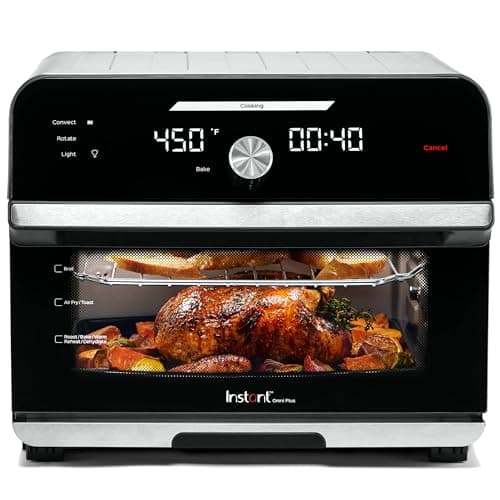
The Instant Omni Plus (18L) wins because it is the only oven here that publishes the number that matters: a stated temperature range down to 170°F, in an 18-liter interior it also states plainly. That published low floor is exactly what dehydrating needs, and the fact you can check it — rather than trust a preset — is why it leads. Its full review is here.
Reading the order
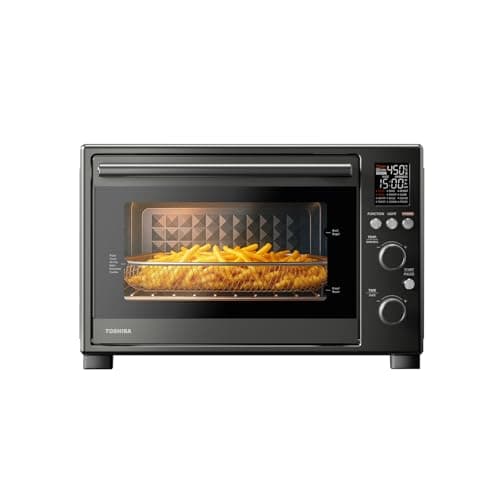
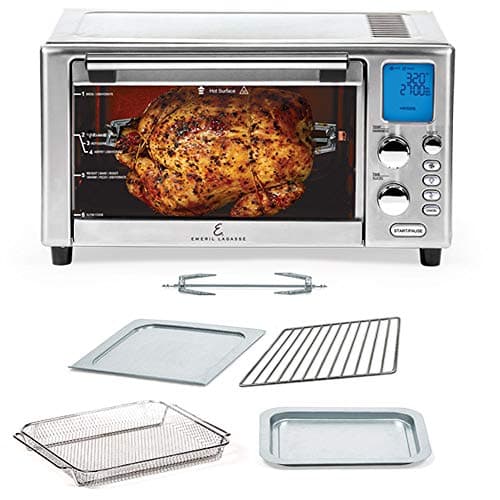
The Toshiba ChefFry is second: a large twelve-function oven that lists both dehydrate and proof as named functions, in a cavity roomy enough to spread a real batch, at just above $200. Its catch is documentation — Toshiba publishes no wattage or temperature range we could find, so you are trusting the named function rather than a checkable floor. The Emeril Lagasse Everyday 360 is third and the mature choice: a long-selling oven that includes dehydrate alongside a rotisserie, with a full glass door that lets you watch a batch without opening it and dumping the heat. Its review is here.
The honest documentation gap
Only the Instant Omni Plus publishes a temperature floor you can verify. The Toshiba and the Emeril both list a dehydrate function but publish no low-temperature figure or wattage that we could find, so we take the named function at face value while noting we cannot check the floor — and we print no running-cost figure for either, because there is no watt number to base one on. That is the standard trade in this corner of the category: the ovens with the most functions often publish the least, and we rank the one you can check above the ones you have to trust.
How to choose
If dehydrating is a real part of why you are buying, take the Instant Omni Plus for its published low floor and stated interior — it is the one you can be sure will actually dry rather than cook. If dehydrate is a nice-to-have alongside more capacity or a rotisserie, the Toshiba and Emeril add those for similar money, with the caveat that you are trusting the label. Every pick here is judged from published specs and owner-reported behavior, not our own testing — how we judge is here — and if you mostly want the roasting side, the rotisserie roundup overlaps two of these picks.
How we picked
Ovens we claim to have cooked in: 0
Everyone in this category tells you they roasted forty chickens. We have roasted none, and we say so. Here is what we do instead: read the manufacturer's manual and spec sheet, record the published wattage, interior volume, temperature range and warranty term, work out what the oven costs to run for an hour and for a year, show the arithmetic so you can redo it with your own electricity rate, and cite all of it. Where a brand publishes no wattage, we print no running cost rather than borrowing a number from a similar model. Prices come live from Amazon's API and disappear rather than go stale.
The scores above are judgments from that documented research — not test results. One of the five metrics is Documentation: whether the manufacturer will tell you what its oven draws at all. The full rubric, including what disqualifies an oven, is published in full.