HUB 02
Countertop Convection Ovens
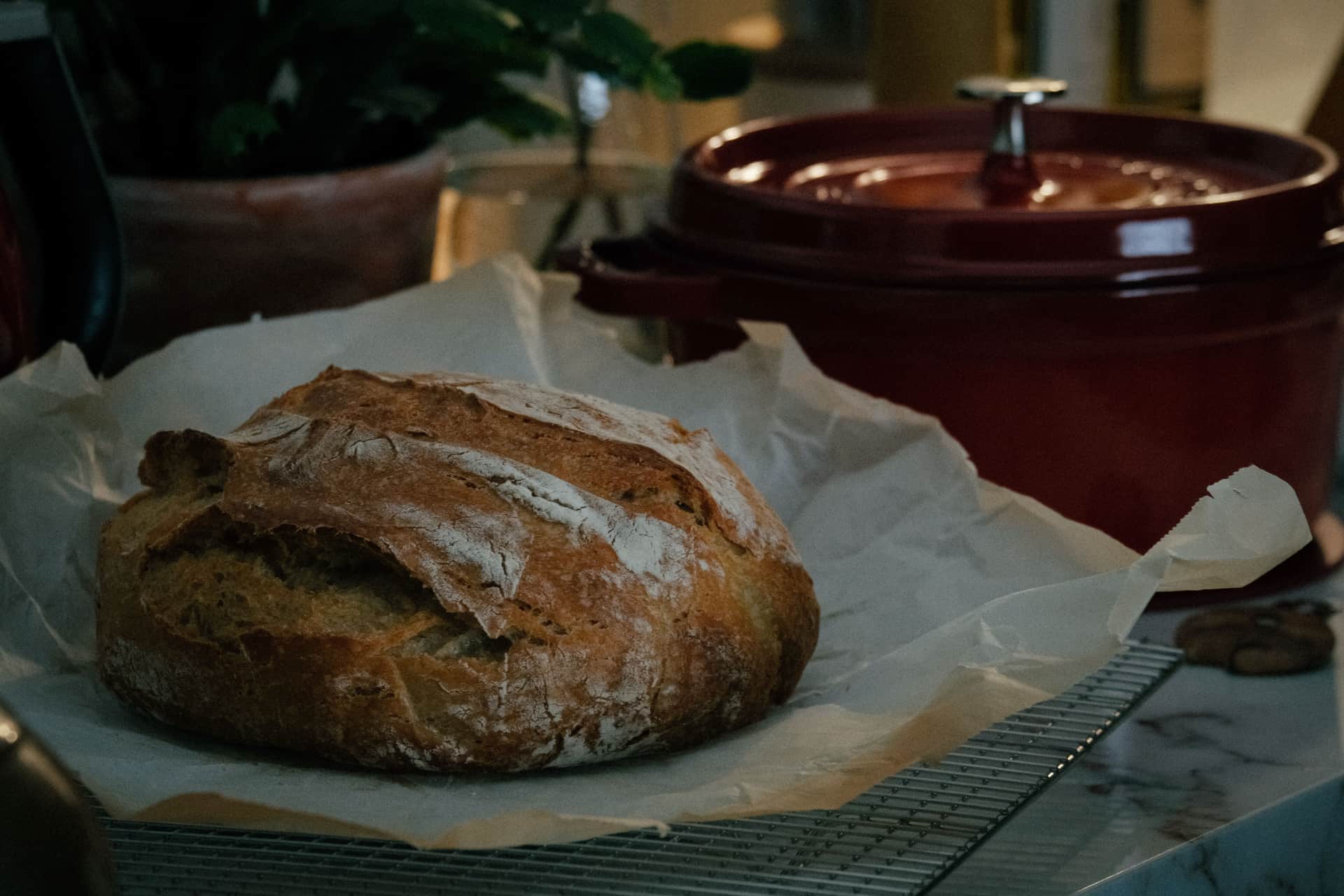
The baking axis. These are the ovens people buy to stop heating a full-size range for one loaf, and the specifications that decide whether that works — usable interior height, real temperature floor, element placement — are almost never the ones on the front of the box.
We earn a commission if you buy through our links. It does not change the price you pay, and it does not decide our picks — the scoring rubric is published in full, including what disqualifies an oven. How this works.
Start here
The Best Countertop Convection Ovens
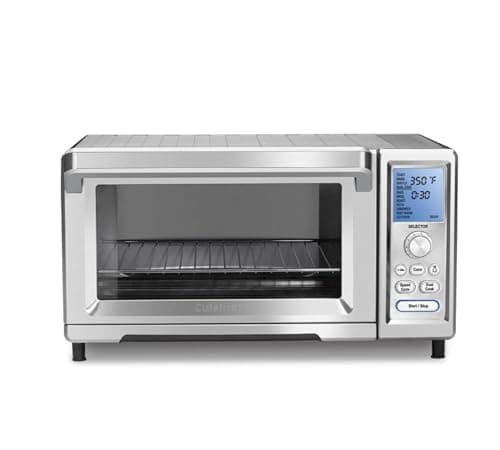
Our top pick: Cuisinart Chef's Convection Toaster Oven (TOB-260N1) — The only oven here whose manufacturer publishes both a wattage and an interior volume in cubic feet on the same page. 0.95 cubic feet at 1,800 W, with a stated list of what fits — a 13-inch pizza, a 9x13 pan, nine slices.
The case for a second, smaller oven
A full-size wall oven holds roughly five cubic feet of air and has to heat all of it before it can cook anything. A countertop convection oven holds around one. If what you are making occupies less than a tray, the small oven reaches temperature in a fraction of the time and spends a fraction of the energy getting there — and in summer, it does not turn the kitchen into a room you avoid.
That is the honest argument for this category, and it is a good one. What it is not is a general replacement. A countertop oven cannot hold a Thanksgiving turkey, its temperature control is usually looser than a modern range's, and its recovery after you open the door is worse because there is less thermal mass inside to buffer the loss.
What decides whether it bakes well
Three things, in order, and only one of them is on the box.
Interior height. Bread rises. A loaf that clears the tin by three inches needs three inches of clearance above it before the top element scorches the crust while the crumb is still wet. This is the single most common failure in a countertop oven and it is almost never published — most brands quote a capacity in quarts or slices, which tells you the volume but not the shape. Where a manufacturer publishes a cubic-foot figure and a clearance, that is a brand that expects you to bake in it.
The temperature floor, not the ceiling. Everyone quotes a maximum. Proofing dough wants a stable 80–100°F, and slow-roasting wants 200–225°F, and a great many ovens simply will not hold a temperature that low — their thermostats are calibrated for the middle of the range and the element cycles too coarsely at the bottom of it. An oven with a genuine proof setting is not doing anything exotic; it is running the element at a duty cycle low enough to hold a low number, which is harder than getting hot.
Element layout. Two elements switched together give you a hot top and a hot bottom. Four to six elements that can be driven independently let the oven put heat where the function needs it — more from below for pizza, more from above for browning a gratin. This is the actual mechanical difference behind the price gap in this category, and it is the one thing you genuinely cannot retrofit.
Convection is not a setting, it is a fan
“Convection” on a control panel means the fan runs. That is all. The reason it matters is boundary-layer physics: still air next to a wet surface stays cooler and more humid than the air a few millimeters away, which slows both drying and browning. Moving the air strips that layer off, so heat transfers faster and the surface dries sooner.
Because of that, a convection oven cooks faster than the same oven with the fan off, and the conventional adjustment is to drop the temperature by about 25°F or shorten the time by roughly a fifth. The conversion table covers this properly. What matters here is that the adjustment is real — following a conventional recipe in a convection oven without it is the most common reason people conclude their new oven “burns everything”.
“Natural convection”, which appears on several budget models, means there is no fan and the air moves because hot air rises. That is true of every oven ever built, including a campfire. It is not a feature, and it is worth knowing that the phrase in the marketing is doing more work than the mechanism in the oven.
What to spend
Below roughly $100 you are buying a box with two elements and a bimetallic thermostat that will hold your set point to within a wide margin. Between $150 and $300 you get a fan, a digital thermostat and usually a published specification you can check. Above $300 you are buying independently driven elements and, in one or two cases, a manufacturer that publishes everything. For bread specifically, the step from $100 to $200 buys more than the step from $300 to $400.
The one axis where spending more genuinely buys volume rather than control is the top of the range. The full-size band is ranked on published interior alone, and it comes with a trade this hub should state plainly: the ovens with the most liters behind the door are, almost without exception, the ones whose makers publish the least about them.
Two jobs worth their own page
A bird is the first one, and it is the job this category is least honest about. Exactly two manufacturers here will print a turkey weight next to their oven, and neither of them sells the biggest box — which ovens publish a poundage, and what the probe changes. The second is a business rather than a dinner: running a home bakery out of a countertop oven comes down to the pan the maker will commit to, and not one oven in this catalog publishes a figure that admits a half-sheet. For everyday roasting rather than either, the roasting ranking is the page to start from.
The dimension almost nobody here publishes
Every other ordering of this hub is horizontal — a pan is a footprint, a pizza is a diameter, a bird is a weight. A cake is the one job decided by height, and exactly three ovens in this catalog publish an interior height at all, which is why the cake ranking is led by a $150 oven rather than a $400 one and why BLACK+DECKER's instruction to keep food an inch and a half clear of the top elements is the most useful line in any manual we have read for this hub. And before any of that, the prior question: whether one of these is worth buying at all — which has three honest yeses, three honest noes, and an electricity saving far smaller than the marketing implies.
Who is eating decides more than the box does
Capacity advice in this category is written for a family, and most of these ovens are bought by one or two people. At two servings nothing is amortised: the oven draws its rated power whether it is cooking for six or for two, so the wattage stops being a footnote and becomes the cost of dinner. Ranking the field on cost per meal rather than cost per hour reorders it — the cheapest oven here is also the cheapest to run, at 1,120 published watts against the 1,800 most of the category assumes, which is about 8.6 cents for a 25-minute meal against 13.8. The spread across a year is nineteen dollars, which is not a reason to buy a worse oven; it is a reason to stop treating 1,800 watts as a feature.
Everything in this section
All of Countertop Convection Ovens
Roundup
The Best Countertop Convection Ovens
Ranked on interior volume, temperature range and element control. The Cuisinart TOB-260N1 wins by publishing both wattage and volume.
Top pick: Cuisinart Chef's Convection Toaster Oven (TOB-260N1) · 5 ranked, 5 with live prices
$299.95on AmazonRoundup
The Best Countertop Oven for Baking Bread
Judged on interior height, proof-temperature stability and element control — the three things that actually decide a loaf.
Top pick: Cuisinart Chef's Convection Toaster Oven (TOB-260N1) · 2 ranked, 2 with live prices
$299.95on Amazon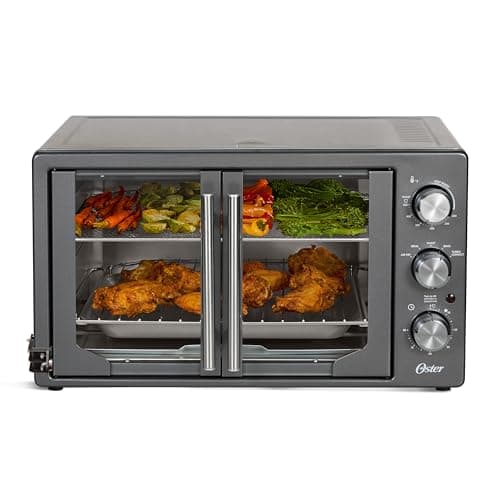
Roundup
The Best Countertop Convection Ovens Under $200
The most convection oven for under $200. The Oster 42L wins on published interior and French doors; the Elite Gourmet is the biggest cavity for the least money.
Top pick: Oster Extra Large 42 L French Door Countertop Toaster Oven, 6-in-1 · 3 ranked, 3 with live prices
$142.26on AmazonRoundup
The Best Countertop Convection Ovens for Roasting
The convection ovens that roast a chicken or a tray of vegetables without firing the big oven. The Cuisinart TOB-260N1 wins on a published interior at 1,800 W; picks for even heat and raw room follow.
Top pick: Cuisinart Chef's Convection Toaster Oven (TOB-260N1) · 3 ranked, 3 with live prices
$299.95on Amazon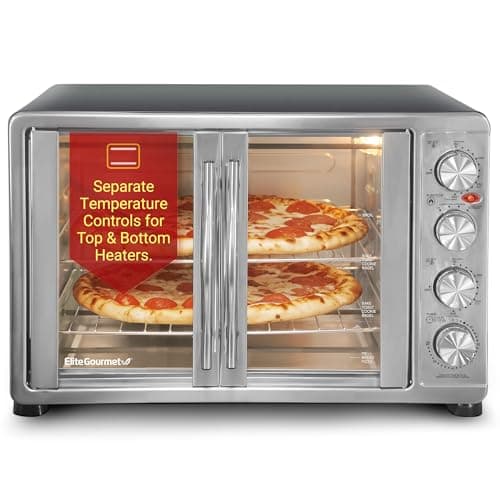
Roundup
The Best Full-Size Countertop Convection Ovens
Ranked on published interior volume rather than the word XL. The Elite Gourmet's 47.5 quarts leads on raw room; the trade the whole band makes is documentation for space.
Top pick: Elite Gourmet ETO4510B French Door 47.5 Qt Convection Oven · 4 ranked, 4 with live prices
$168.19on Amazon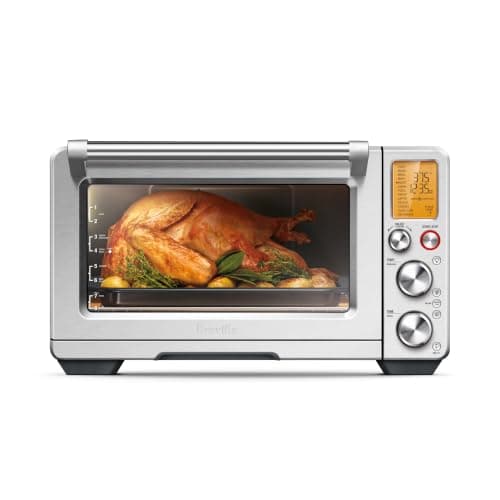
Roundup
The Best Premium Countertop Convection Ovens
What $300+ buys: element control, documentation and build. What it does not buy: a cheaper hour -- every oven here draws the same 1,800 W as a $100 one.
Top pick: Breville Smart Oven Air Fryer Pro (BOV900BSS) · 4 ranked, 4 with live prices
$399.95on AmazonRoundup
The Best Countertop Ovens for a Turkey
Ranked on the published turkey weight the maker will stand behind, the published interior, and whether the oven includes a probe that stops the cook at an internal temperature. Live prices, and the three ovens with no published wattage are marked as such.
Top pick: Breville Smart Oven Air Fryer Pro (BOV900BSS) · 5 ranked, 5 with live prices
$399.95on AmazonRoundup
The Best Countertop Convection Ovens for a Home Bakery
Ranked on the pan the manufacturer will commit to, published element control, temperature ceiling and warranty term. Includes the finding that stops most home-bakery plans: nothing here publishes a half-sheet pan.
Top pick: Cuisinart Chef's Convection Toaster Oven (TOB-260N1) · 5 ranked, 5 with live prices
$299.95on Amazon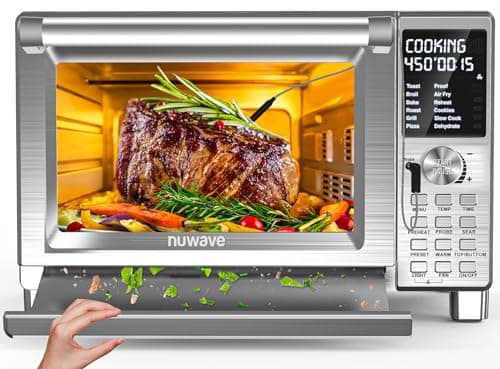
Roundup
The Best Countertop Convection Ovens for Baking Cakes
Ranked on published interior height -- the clearance above a rising cake -- rather than on volume or wattage. Only three ovens in the catalog publish one at all, and only one publishes a pan DEPTH claim, which is the finding.
Top pick: Nuwave Bravo XL Pro Air Fryer Toaster Oven (30 Qt, with probe) · 5 ranked, 5 with live prices
$219.99on Amazon
Filed elsewhere, written for you
Also worth reading
These live under a different section of the site but answer the same question a countertop convection ovens buyer is actually asking.
Running Costs & Power
Is a Countertop Oven Cheaper Than the Big Oven?
For a single tray, the countertop oven heats ~1 cu ft against ~5, so it wins clearly. The arithmetic, and where it flips.
Covered here: Cuisinart Chef's Convection Toaster Oven (TOB-260N1)
$299.95on AmazonGuides & Answers
Convection Oven Conversion Chart
Drop ~25°F or cut time ~20%. The full temperature table, and the one reason 'my convection oven burns everything'.
Covered here: Cuisinart Chef's Convection Toaster Oven (TOB-260N1)
$299.95on AmazonComparisons
Convection vs Conventional Oven
Convection is just the fan on. It cooks faster and more evenly — but conventional recipes need about 25°F less. Here's when to use which.
Top pick: Cuisinart Chef's Convection Toaster Oven (TOB-260N1) · 2 ranked, 2 with live prices
$299.95on Amazon