HUB 03 · Toaster Ovens
Toaster Oven Sizes, and What to Measure First
The dimension that sends an oven back is almost never the one on the box. Here is what to measure — including the door clearance and the depth to the backsplash — before you spend anything.
We earn a commission if you buy through our links. It does not change the price you pay, and it does not decide our picks — the scoring rubric is published in full, including what disqualifies an oven. How this works.
Measure four things, in this order
Depth to the backsplash. This is the one that fails. Manufacturers quote a width because it is flattering, but depth is what determines whether the oven sits flush against the wall or juts into your working space. Measure from the wall to the front edge of the usable counter, and subtract an inch for the cord and the plug behind the oven.
Height to the underside of the cupboard. Wall cabinets typically sit 18 inches above the counter. Many countertop ovens are 11 to 13 inches tall and vent hot air upward, so they need clearance above them as well as room to fit. If the oven lives under a cabinet, measure the gap and leave a couple of inches for the vent.
Door clearance. A drop-down door needs ten to fourteen inches of clear space in front of the oven and becomes a hot horizontal shelf at reaching height. If your counter is shallow or the oven sits near the edge, a roll-top or French-door design is worth more than any interior spec.
Interior, matched to what you cook.“Four slices” is genuinely four slices. “7.2 quarts” is a real volume you can picture. A 9-inch pizza needs a cavity wider than 9 inches plus room for the rack handles, so a “fits a 9-inch pizza” claim on a small oven is often optimistic. Where a manufacturer publishes an interior in cubic feet or liters — the Panasonic FlashXpress does, at 7.2 quarts — you can compare it directly rather than guessing from slice counts.
How slice and quart claims map to food
| Rough interior | Realistic job | Not going to happen |
|---|---|---|
| 4 slice / ~7 qt | Toast, reheating, a small tray for one or two | A 9x13 pan, a whole chicken |
| 6 slice / ~20 qt | A half-sheet pan, a small roast, pizza to about 11 inches | Two dishes at once, a turkey |
| ~1 cu ft / 30 qt+ | A 13-inch pizza, a 9x13 pan, a whole chicken | Thanksgiving; that is what the wall oven is for |
Buy the size you cook on an ordinary Tuesday, not the size you imagine for the dinner party. The party happens twice a year; the larger cavity is slower and more expensive on all the other days.
The hardware
The ovens this page is about
The ovens referred to above, with prices pulled live from Amazon and dated on every card. Full rankings live in the roundups linked from this page.
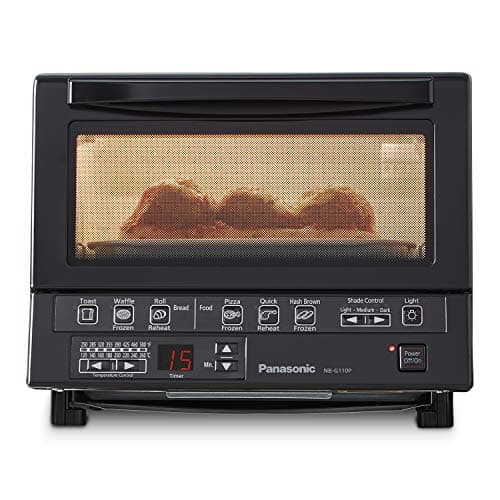
1,300 W
Panasonic FlashXpress Toaster Oven (NB-G110P)
The most completely documented oven on this entire site relative to its size: 1,300 W, 120 V, 60 Hz, 7.2 quarts, 250–500°F, exact millimeter dimensions and a stated weight. Panasonic publishes all of it, and almost nobody else does.
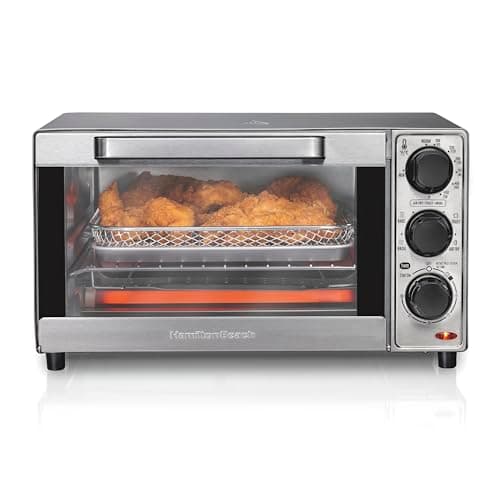
1,120 W
Hamilton Beach Sure-Crisp 4 Slice Air Fryer Toaster Oven Combo (31403)
The cheapest oven on this site with a fan AND a manufacturer-published wattage: Hamilton Beach prints 1,120 watts and the exact dimensions on its own page for model 31403, which is the model Amazon's listing data names. Four slices, a 9-inch pizza, four functions, and nothing electronic to fail.
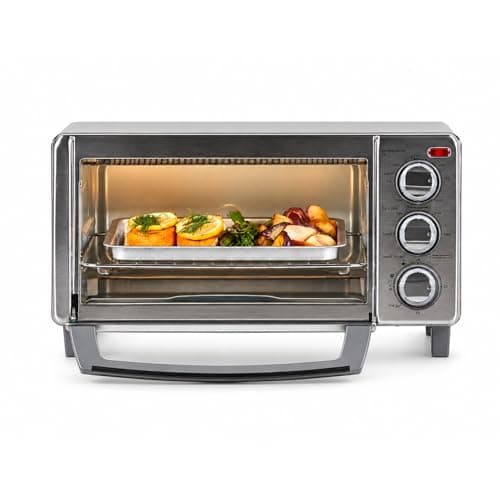
1,150 W
BLACK+DECKER 4-Slice Toaster Oven with Natural Convection (TO1785SG)
1,150 W, 120 V, four slices, a 9-inch pizza and a two-year warranty — all published by BLACK+DECKER on its own site. For sixty-five dollars that is a more complete specification than several ovens here costing three hundred.
#ad · As an Amazon Associate we earn from qualifying purchases.
Keep reading
Related
Receipts
Sources
We have not cooked in these ovens and we do not pretend to have. Specifications come from the manufacturer's own published documents; electricity rates come from the US Energy Information Administration; prices come from the live Amazon API. Where a figure is not published, the page says “not published” rather than guessing. Read the full method.