HUB 04
Head-to-Head Comparisons
Most of these questions have the same answer underneath: it is a fan moving hot air, and the differences are size, speed and what the marketing department called it. We explain the mechanism first, then give you a decision rule rather than a shrug.
We earn a commission if you buy through our links. It does not change the price you pay, and it does not decide our picks — the scoring rubric is published in full, including what disqualifies an oven. How this works.

Start here
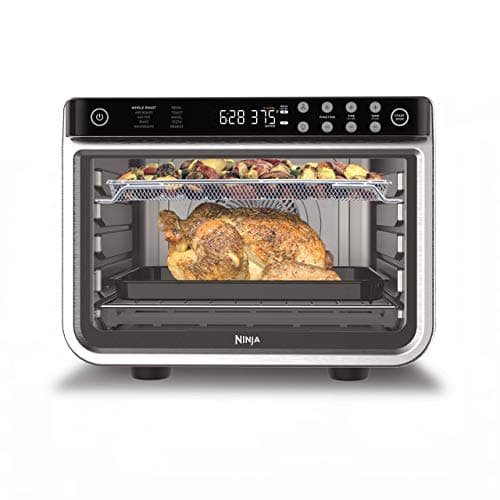
Air Fryer vs Convection Oven
Our top pick: Ninja Foodi 10-in-1 XL Pro Air Fry Oven (DT201) — The value pick, and it is not close. Same 1,800 W as ovens costing more than twice as much, two full cooking levels, and a published capacity claim — two 12-inch pizzas — that is specific enough to be checkable rather than a vibe.
Most of these questions have the same answer
Air fryer versus convection oven. Convection toaster oven versus toaster oven. Air fryer oven versus basket air fryer. Underneath almost every comparison in this category is one mechanism: a fan moving hot air. What changes between the products is how much air is in the box, how fast the fan moves it, and what the marketing department decided to call the result.
Once you know that, the comparisons stop being brand arguments and become geometry. A basket air fryer is a small cavity with a fast fan, so it heats quickly and cooks a small amount of food very well. A countertop convection oven is a large cavity with a slower fan, so it takes longer to come up to temperature and cooks a tray. Neither is better; they are different volumes.
Why we do not crown an overall winner
Because there is not one, and every page that pretends otherwise has quietly substituted its own use case for yours. What we do instead is end each comparison with a decision rule: a specific, checkable condition under which one option is correct, and a statement of what would change the answer.
“Buy the basket if you cook for one or two and want it fast; buy the oven if you cook on trays or need to toast” is a rule you can apply to your own kitchen tonight. “The Ninja wins overall” is not.
The three comparisons that actually matter
Air fryer versus convection oven is the highest-volume question in the category and the one with the cleanest answer: they are the same technology at different scales, and if you already own a convection oven with a rack, you own an air fryer. The long version is here.
Air fryer versus toaster oven is really a question about the fan. A plain toaster oven is radiant only; an air fryer toaster oven adds forced air. If the machine you are comparing has a fan, the difference is smaller than the price gap suggests. The long version is here.
Countertop oven versus the oven you already own is the one nobody frames as a comparison, and it is the one with real money in it. Heating one cubic foot instead of five to cook a tray of vegetables is a genuine saving, repeated several times a week. We did that arithmetic.
What we compare on
Published specifications and mechanism, never impressions. We have not cooked in these ovens, so a comparison here will never tell you which produced a crispier chip — it will tell you which has more usable interior, which draws more power, which publishes a temperature range, and which physical difference explains the outcome you can expect. Where two ovens are genuinely equivalent, we say that too, because “these are the same and one is cheaper” is the most useful sentence a comparison can contain and almost nobody writes it. The clearest example on this site is Breville's BOV900 against its BOV950: same chassis, same six elements, same 1,800 watts, same thirteen functions on the dial — the entire premium is an app and the three heat modes that live inside it. The counter-example is Breville's BOV845 against its BOV900: the same 1,800 watts, but five elements against six, one fan speed against two, three rack positions against eight and ten functions against thirteen — a cheaper oven that is genuinely a different oven, and the page says which of those differences you will notice.
Every comparison also carries the running-cost figure for both sides. In a category where essentially everything is 1,800 W, that number is usually identical — and knowing that a $400 oven and a $160 oven cost exactly the same to run removes one of the arguments people most often use to justify the upgrade.
Where the difference is not on the spec sheet
The comparisons worth writing are increasingly the ones where the published specifications agree and the instruction books do not. Breville's BOV845 against its BOV860 is the clearest case on the site: same chassis, same 1,800 watts, one function apart on paper — and in the two books, a convection button with three positions instead of two and a bagel function that works differently and sits on a different rack. Neither product page mentions either.
The opposite problem shows up on the Ninja Double Oven against the Foodi XL Pro, where one model publishes 1,800 watts and the other publishes no wattage at all, so only half that comparison can be costed out — and we say which half rather than borrowing a number. And where the question is not two models but two whole formats, the three-way people actually search resolves to a two-way plus a marketing term.
The comparison nobody writes down
The appliance a toaster oven most often replaces is not another oven — it is the pop-up toaster already on the counter, and that is its own page now. It is built out of three manufacturer toaster manuals rather than a spec table, because the toaster side of this category documents itself strangely: Hamilton Beach and Proctor Silex print a rating-plate wattage only in the electrical-ratings block on the last page of the use and care guide and nowhere on the product page, and Breville — whose oven books print the rating line — publishes no wattage for its toaster at all. The page settles the electricity argument with the arithmetic (750 watts against 1,100 to 1,800 works out to roughly a cent per breakfast, which is not a reason to choose either one), and it hands the strongest argument for the oven to the toaster manuals themselves: both American-brand guides tell you to cook toaster pastries in a toaster oven rather than a toaster, and rule out anything buttered, fried, frozen or not bread-shaped by name.
The cross-brand comparison most people actually face
Not Breville against Breville, but the value oven against the reference oven: the Nuwave Bravo XL Pro against the Breville BOV900 puts every published figure side by side, and the interesting answer falls out of the one number both of them claim. Sometimes the comparison that matters is inside one brand’s own lineup, and the answer is not the one the names imply: the three Our Place Wonder Ovens are published with two of the three sharing an identical interior, exterior, capacity and wattage, which turns a size decision into a question about a temperature floor. Beyond the ovens, three pages here compare the whole class to something else in the kitchen: against a microwave, against an OTG, and against a halogen oven— which is the comparison that separates a fan from a lamp.
When two good brands document different things
The most instructive comparison on this hub is not which oven is better but which half of the spec sheet each maker chose to print. Our Place against the Breville Smart Oven is the clearest case: both print a rating line in their own manual, which almost nobody at any price does, and then Our Place publishes the interior dimensions while Breville publishes a temperature floor 80 degrees lower — and neither publishes both. One more definitional question belongs here too, because the answer is a naming trap this catalog contains in both directions: whether a toaster oven is a convection oven is not settled by the word on the box.
Everything in this section
All of Comparisons
Head to head
Air Fryer vs Convection Oven
Same technology, different cavity size. The decision rule: buy the oven if you cook on trays; you may already own the air fryer.
Top pick: Ninja Foodi 10-in-1 XL Pro Air Fry Oven (DT201) · 2 ranked, 2 with live prices
$379.99on AmazonHead to head
Air Fryer vs Toaster Oven
The only real difference is the convection fan. The rule: pay for the fan if you crisp and roast; skip it if you mostly toast.
Top pick: Ninja Foodi 10-in-1 XL Pro Air Fry Oven (DT201) · 2 ranked, 2 with live prices
$379.99on Amazon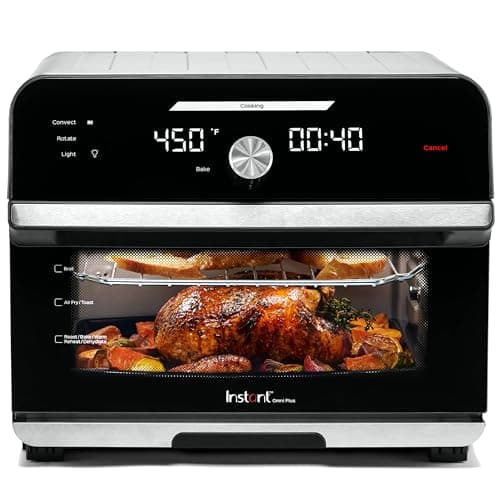
Head to head
Air Fryer vs Microwave
Opposite mechanisms, opposite strengths: crisping vs speed. The rule is usually 'both', and here's which to buy first.
Top pick: Instant Pot Omni Plus 19QT/18L Toaster Oven Air Fryer, 10-in-1 · 2 ranked, 2 with live prices
$249.99on Amazon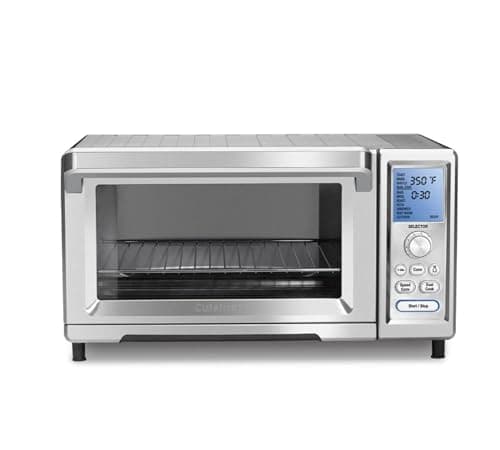
Head to head
Convection vs Conventional Oven
Convection is just the fan on. It cooks faster and more evenly — but conventional recipes need about 25°F less. Here's when to use which.
Top pick: Cuisinart Chef's Convection Toaster Oven (TOB-260N1) · 2 ranked, 2 with live prices
$299.95on Amazon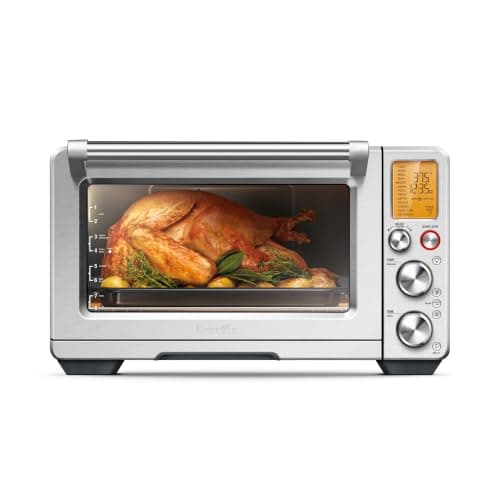
Head to head
Breville vs Ninja Air Fryer Ovens
Same 1,800 W, same running cost. The Breville buys Element IQ control and full documentation; the Ninja buys two cooking levels for well under the price.
Top pick: Breville Smart Oven Air Fryer Pro (BOV900BSS) · 2 ranked, 2 with live prices
$399.95on AmazonHead to head
Cuisinart vs Breville Convection Ovens
The two best-documented brands. Cuisinart's TOB-260N1 publishes wattage and volume together; Breville's Smart Oven Pro publishes wattage and controls the heat better. Depth vs control.
Top pick: Cuisinart Chef's Convection Toaster Oven (TOB-260N1) · 2 ranked, 2 with live prices
$299.95on Amazon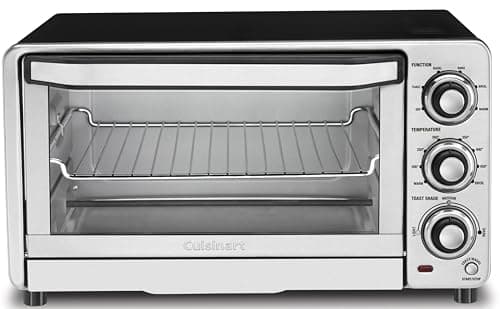
Head to head
Toaster Oven vs Microwave
Opposite mechanisms: a microwave excites water for speed, a toaster oven browns with dry heat for texture. Buy the toaster oven for crisp results; keep the microwave for reheating liquids.
Top pick: Cuisinart Custom Classic Toaster Oven Broiler (TOB-40N) · 2 ranked, 2 with live prices
$108.22on Amazon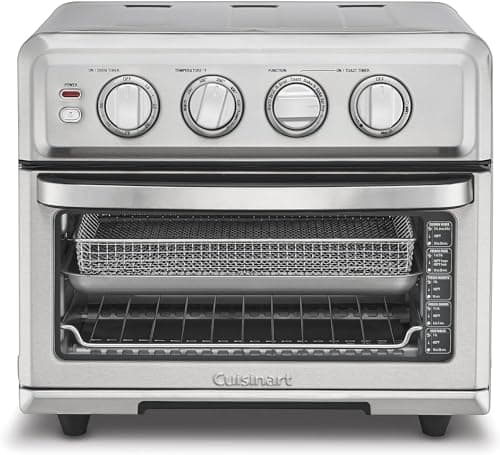
Head to head
Air Fryer vs Halogen Oven
Both circulate hot air to crisp food. The halogen bulb heats fast and lets you watch through glass; a modern air fryer oven insulates better, holds heat and toasts. The oven usually wins.
Top pick: Cuisinart Air Fryer Toaster Oven, 8-in-1 (TOA-70) · 2 ranked, 2 with live prices
$219.95on Amazon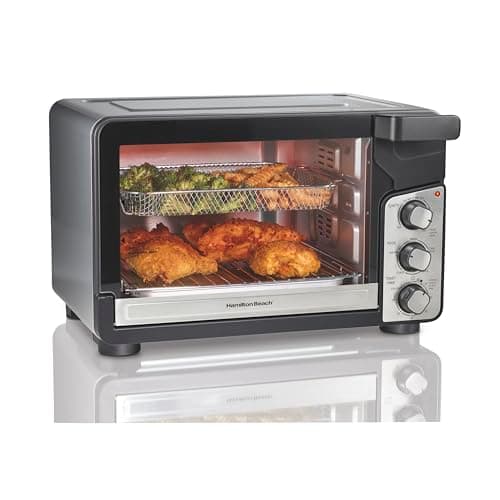
Head to head
Air Fryer Oven vs OTG
An OTG is a radiant oven; an air fryer oven adds a fan. The fan crisps and browns more evenly; the OTG is simpler, often cheaper, and better for cakes. One component, two use cases.
Top pick: Hamilton Beach Easy View XL Toaster Oven with Sure-Crisp Air Fry, 6 Slice · 2 ranked, 2 with live prices
$69.99on AmazonHead to head
Ninja vs Cuisinart Countertop Ovens
Cuisinart publishes both wattage and interior volume and adds a dual-cook mode; Ninja gives two cooking levels and the most room per dollar. Documentation and control vs raw interior.
Top pick: Cuisinart Chef's Convection Toaster Oven (TOB-260N1) · 2 ranked, 2 with live prices
$299.95on Amazon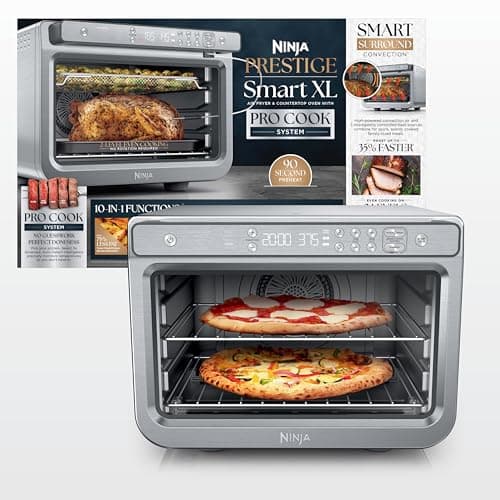
Head to head
Ninja DT201 vs DT551
Same XL two-level oven; the DT551 adds a Pro Cook System thermometer for about ten dollars over the probe-less DT201. It replaced the discontinued DT251, which cost roughly double -- so the answer has flipped.
Top pick: Ninja Prestige Smart XL with Pro Cook System, 10-in-1 (DT551) · 2 ranked, 2 with live prices
$429.95on AmazonHead to head
Breville BOV860 vs BOV900 Pro
Same 1,800 W, same running cost, same Element IQ. The BOV900 Pro is wider with a published 1-cubic-foot interior and 13 functions; the BOV860 is narrower, fits a standard counter, and lists 11.
Top pick: Breville Smart Oven Air Fryer Pro (BOV900BSS) · 2 ranked, 2 with live prices
$399.95on AmazonHead to head
Convection Toaster Oven vs Toaster Oven
A fan is the whole difference. Two Cuisinarts, both a published 1,800 W, one with a fan -- so the only variable left is the fan itself. What it buys, what it costs, and when to skip it.
Top pick: Cuisinart Chef's Convection Toaster Oven (TOB-260N1) · 2 ranked, 2 with live prices
$299.95on AmazonHead to head
Air Fryer vs Toaster Oven vs Convection Oven
Three names, two machines. Convection and air fry are the same fan; the plain toaster oven is the real outlier. A decision table and a rule you can use in the aisle.
Top pick: Ninja Foodi 10-in-1 XL Pro Air Fry Oven (DT201) · 3 ranked, 3 with live prices
$379.99on AmazonHead to head
Breville BOV900 vs BOV950 Joule Oven
Two Brevilles, one chassis. Same 21.4 x 17.3 x 12.7 inches, same six quartz elements, same 1,800 W, same thirteen dial functions -- the BOV950 adds Wi-Fi, Autopilot and three heat modes that live only in the app.
Top pick: Breville Smart Oven Air Fryer Pro (BOV900BSS) · 2 ranked, 2 with live prices
$399.95on Amazon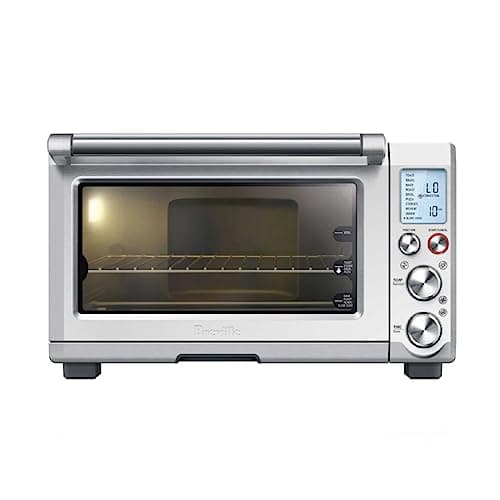
Head to head
Breville BOV845 vs BOV900: Smart Oven Pro vs Smart Oven Air Fryer Pro
Not the same oven with a basket added. Read off both books: 5 quartz elements vs 6, one convection speed vs two, 3 rack positions vs 8, 120-450°F vs 120-480°F, 6 slices vs 9, and 10 functions vs 13 -- the BOV845 has no Air Fry, Dehydrate or Proof preset. Same 1,800 W either way.
Top pick: Breville Smart Oven Pro (BOV845BSS) · 2 ranked, 2 with live prices
$269.95on Amazon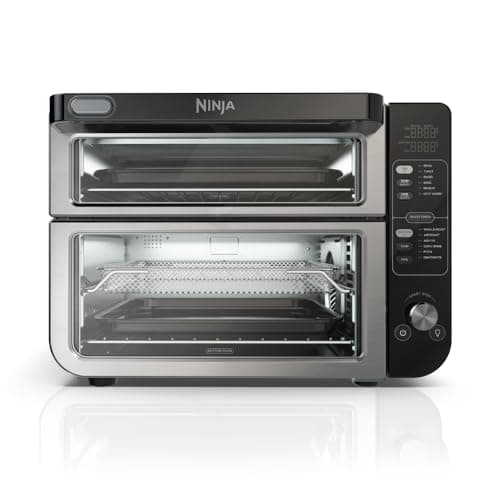
Head to head
Ninja Double Oven (DCT401) vs Ninja Foodi XL Pro (DT201)
The FlexDoor splits one box into two independently controlled ovens; the XL Pro gives you one bigger cavity and a published 1,800 W. Which matters depends entirely on whether you cook two things at two temperatures.
Top pick: Ninja Double Oven with FlexDoor, 12-in-1 (DCT401) · 3 ranked, 3 with live prices
$349.95on AmazonHead to head
Breville BOV845 vs BOV860: Smart Oven Pro vs Smart Oven Air Fryer
Same box, same power, one function apart on the spec sheet -- but the BOV860's convection button has three positions where the BOV845's has two, and its bagel function works differently and sits on a different rack. Both from the books.
Top pick: Breville Smart Oven Pro (BOV845BSS) · 3 ranked, 3 with live prices
$269.95on Amazon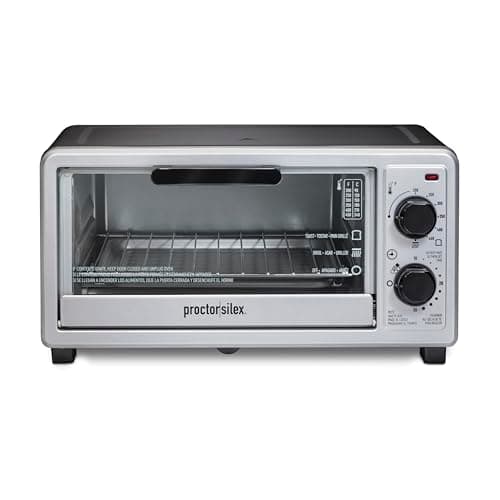
Head to head
Toaster Oven vs Toaster
A 2-slice toaster is a published 750 W; a toaster oven is 1,100 to 1,800 W. Over four minutes that is a difference of about a cent. The real gap is what each can physically do -- and the toaster manuals name the food they want you to take to an oven.
Top pick: Proctor Silex 4 Slice Countertop Toaster Oven (31260) · 4 ranked, 4 with live prices
$49.95on Amazon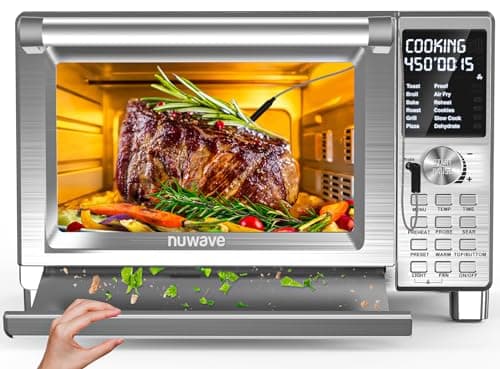
Head to head
Nuwave Bravo XL Pro vs Breville Smart Oven Air Fryer Pro (BOV900)
The value oven with a probe against the best-documented oven in the category. Both claim about 30 quarts; only the Nuwave prints the inside dimensions, and multiplying them out loses five of them. Live prices on both.
Top pick: Nuwave Bravo XL Pro Air Fryer Toaster Oven (30 Qt, with probe) · 3 ranked, 3 with live prices
$219.99on Amazon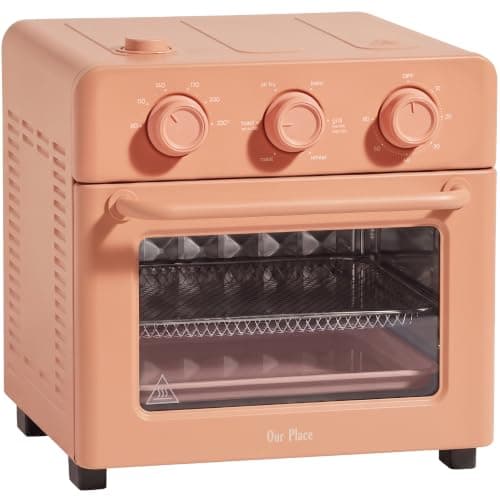
Head to head
Our Place Wonder Oven vs Wonder Oven Pro (and the Large)
Three models, one published box between two of them. The Large and the Pro share an interior, an exterior, a capacity, a rack count and a wattage -- so the decision is about a 200°F floor and a 60-minute timer, not about space. Live prices on all three.
Top pick: Our Place Wonder Oven (6-in-1, 13 Qt) · 3 ranked, 3 with live prices
$185.00on AmazonHead to head
Our Place Wonder Oven vs Breville Smart Oven
The cross-brand head-to-head for a small counter. Our Place publishes the interior dimensions, the capacity and a steam function; Breville publishes a 120F floor and no interior figure at all. Each brand answers exactly one of the two questions that decide it.
Top pick: Our Place Wonder Oven (6-in-1, 13 Qt) · 3 ranked, 3 with live prices
$185.00on Amazon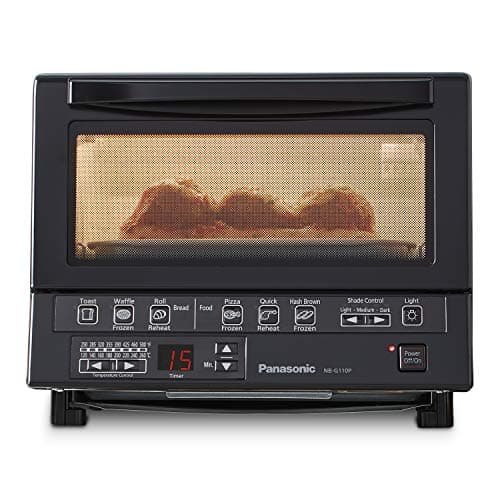
Head to head
Panasonic FlashXpress vs Breville Smart Oven
A fork, not a price ladder. Panasonic publishes 250-500F, 1,300 W and the smallest fully specified box here; Breville publishes 120-445F, 1,800 W and no interior dimension at all. The job you want decides it.
Top pick: Panasonic FlashXpress Toaster Oven (NB-G110P) · 3 ranked, 3 with live prices
$149.99on AmazonHead to head
Instant Omni Plus vs Ninja Foodi XL
The opposite-halves problem at its starkest. One brand publishes the cavity and the range, the other publishes the power — so neither column of the comparison table can be completed, and that is the finding.
Top pick: Instant Pot Omni Plus 19QT/18L Toaster Oven Air Fryer, 10-in-1 · 3 ranked, 3 with live prices
$249.99on Amazon
Filed elsewhere, written for you
Also worth reading
These live under a different section of the site but answer the same question a comparisons buyer is actually asking.
Guides & Answers
How Do Air Fryers Actually Work?
A heating element plus a fan circulating hot air. No oil, no frying. The one page most of the others depend on.
Covered here: Ninja Foodi 10-in-1 XL Pro Air Fry Oven (DT201)
$379.99on AmazonAir Fryer Toaster Ovens
The Best Air Fryer Toaster Ovens
Eight ovens ranked on watts, interior and live price. The Breville Pro wins on documentation; the Ninja DT201 wins on value.
Top pick: Breville Smart Oven Air Fryer Pro (BOV900BSS) · 8 ranked, 8 with live prices
$399.95on AmazonCountertop Convection Ovens
The Best Countertop Convection Ovens
Ranked on interior volume, temperature range and element control. The Cuisinart TOB-260N1 wins by publishing both wattage and volume.
Top pick: Cuisinart Chef's Convection Toaster Oven (TOB-260N1) · 5 ranked, 5 with live prices
$299.95on Amazon