Skip to content
CC

HUB 03 · Toaster Ovens

BALMUDA The Toaster Alternatives

BALMUDA publishes more about its toaster than most brands in this category publish about ovens costing the same: a rated wattage, the interior in millimeters, the cord length, the timer, the boiler volume and a warranty term. So the useful question is not what beats it — it is which BALMUDA property you were actually buying, because the answers are different ovens and only one of them involves steam.

By Stephen V.Updated How we rank
#ad

We earn a commission if you buy through our links. It does not change the price you pay, and it does not decide our picks — the scoring rubric is published in full, including what disqualifies an oven. How this works.

The short answer

Quick picks

#OvenBest forScorePrice
01
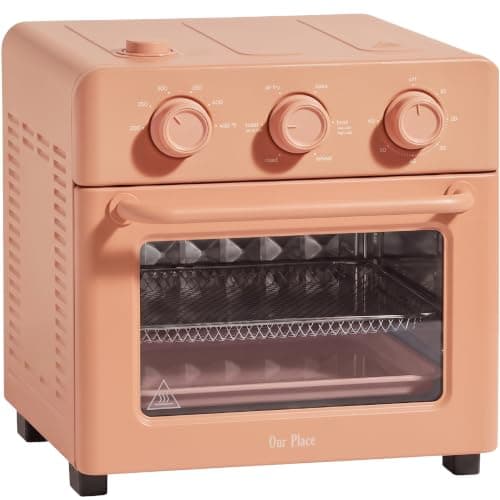
Our Place Our Place Wonder Oven (6-in-1, 13 Qt)
Our Place Wonder Oven (6-in-1, 13 Qt)

A small air fryer oven whose maker publishes everything

1,400 W
7.7
$149.00Amazon
02
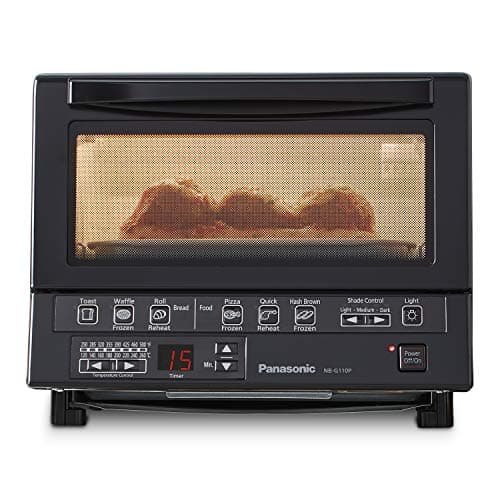
Panasonic Panasonic FlashXpress Toaster Oven (NB-G110P)
Panasonic FlashXpress Toaster Oven (NB-G110P)

The best-specified small oven here

1,300 W
7.8
$117.99Amazon
03
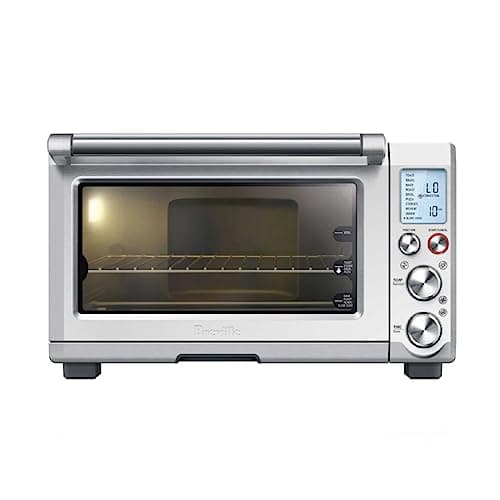
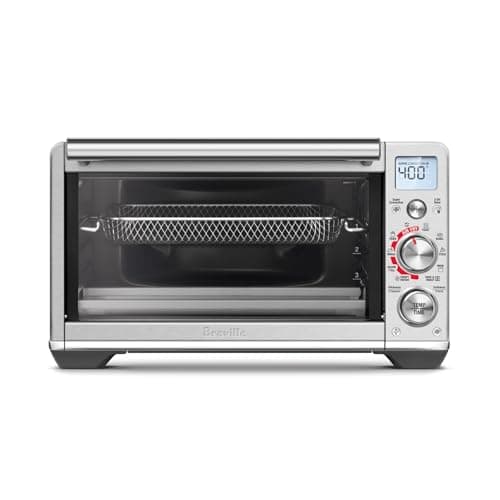
Breville Breville Smart Oven Air Fryer Compact (BOV680BSS)
Breville Smart Oven Air Fryer Compact (BOV680BSS)

A fully documented 1,800 W in a small footprint

1,800 W
8.0
$199.95Amazon
04
Breville Breville Smart Oven Pro (BOV845BSS)
Breville Smart Oven Pro (BOV845BSS)

Baking, if you bake seriously

1,800 W
8.4
$215.95Amazon
051,800 W
7.6
$99.95Amazon

#ad · Prices pulled live from the Amazon Product API, last checked November 22, 2026. Where we have no verified live price we show none — we would rather leave a gap than print a number that has gone stale. The wattage column is what the manufacturer publishes; “not published” means exactly that, and we have not estimated one. Scores are ours, compiled from published specifications, and are not test results.

The short answer

If steam is why you wanted a BALMUDA, buy the Our Place Wonder Oven — it is the only oven in this catalog whose maker publishes a steam function, and it publishes a rating-plate wattage, a temperature range, its interior in inches and a warranty term alongside it. If the toast is why you wanted one, buy the Panasonic FlashXpress (NB-G110P), which is rated at the same 1,300 watts BALMUDA publishes, into a cavity of almost exactly the same size, and reaches 500°F where BALMUDA's hottest published setting is 230°C (446°F). If what you wanted was a small oven with real control, the Breville Smart Oven Air Fryer Compact (BOV680) prints 1,800 W on a rating line in its own downloadable manual and a 120°F floor with it. The budget pick is the Cuisinart Custom Classic (TOB-40N): 1,800 W behind three knobs, for a fraction of any of the above.

We have not cooked in any of these, and we have not cooked in a BALMUDA. Our rubric says so in those words. This page is a comparison of published documents, which is the only comparison we can make honestly.

What BALMUDA actually publishes, first

It is worth being precise about this, because BALMUDA is frequently described as a design product and its specification sheet is better than that reputation suggests. On its own specification page the company publishes a rated power consumption of 1300 W, the supply conditions, an exterior of 357 x 321 x 209 mm, an interior of 275 x 224 x 178 mm, a weight of about 4.1 kg, a power cord of about 1 m, a timer of 1–10 and 15 minutes, the country of manufacture, a one-year warranty extended to two through its own store, and the volume of the steam boiler: 5cc. The US listing for The Toaster Pro adds the exterior in inches — 14.1 wide, 12.6 deep, 8.2 high — and names all six modes: Shokupan, Golden Toast, Pizza, Croissant, Oven and Salamander Grill.

Three of those figures are ones almost nobody in this category publishes at all. Interior dimensions: exactly one oven in our whole catalog prints them in inches. A boiler volume: nobody else prints one, because nobody else has a boiler. A cord length: essentially unheard of. Measured on the documentation metric this site actually scores, BALMUDA would rank near the top of the catalog, and that is a real thing to be giving up when you shop elsewhere.

Two notes on sourcing, because they matter. The engineering figures above are from BALMUDA's Japanese specification page, which also states that the model is for domestic use in Japan — so the AC100V supply figure on it is not the US rating, and we are not presenting it as one. BALMUDA's US site returned an error to every request we made this run, so the US-market figures here come from the manufacturer-supplied listing copy instead. The 1,300-watt rating and the 5cc boiler are consistent across both. And on the US listing the baking tray is a separate purchase, which is a real cost to factor in rather than a criticism — the oven is sold as a toaster, and it is unusually honest about that.

The one thing on this page that nothing replaces

BALMUDA sells modes by bread: a setting for Japanese milk bread, one for a croissant, one for a thick slice. Nothing else in this category does that. Every oven below sells you temperatures and a function list, and you work out the bread yourself. If the named-bread interface is the reason the oven appealed to you, the honest answer is that no alternative here reproduces it, and you should weigh that before reading further rather than after.

What the alternatives can do is match the mechanism underneath: steam, heat density in a small cavity, or a published floor you can hold. So that is how they are ordered below — by the property, not as a flat ranking.

OvenThe BALMUDA property it matchesRated powerPublished rangeSteam?Interior published?
BALMUDA The Toaster (the original, for reference)—1300 W (JP spec page)Classic 170 / 230°CYes — 5cc boilerYes — 275 x 224 x 178 mm
Our Place Wonder OvenSteam, and the published interior1400 W (manual rating line)200–450°FYes — steam functionYes — 10 x 10.3 x 7.6 in.
Panasonic FlashXpressHeat density in a small cavity1300 W at 120 V, 60 Hz250–500°FNoVolume only: 7.2 qt
Breville BOV680 CompactControl, and a low published floor1800 W (manual rating line)120–445°FNoNo — 11" pizza pan stated
Breville BOV845 Smart Oven ProThe bread result, in a bigger box1800 W (product page)120°F floor; no band publishedNoNo
Cuisinart Custom Classic TOB-40NToast, for the least money1800 Watt (brand copy)Not publishedNoVolume only: 0.5 cu ft

One number from that table is worth pulling out. BALMUDA's published interior, 275 x 224 x 178 mm, is about 10.8 x 8.8 x 7.0 inches — roughly 669 cubic inches, or about 11.6 US quarts. The Our Place Wonder Oven's published interior is 10 x 10.3 x 7.6 inches. The two cavities are within about an inch of each other in every direction, which is the cleanest comparison on this page and only possible because both brands print the figure.

1. Our Place Wonder Oven — if steam is what you were buying

Who it is for: the reader who got as far as “steam toaster” and stopped. Our Place names steam among the Wonder Oven's six functions, which makes it the only oven in this catalog that publishes one. It also publishes all four of the things we score documentation on — a rating line of 120V 60Hz 1400W on the cover of its own manual, a 200–450°F range, an interior of W10" x D10.3" x H7.6", and a one-year warranty — and that combination is scarcer than any feature. At 1,400 W it costs 25.7¢ an hour to run at 18.34¢ per kWh against 33.0¢ for the 1,800-watt field, and it asks for only an inch of clearance on each side.

The cons. The steam is not BALMUDA's steam and we are not going to pretend it is: Our Place publishes a function name and a water quantity in teaspoons, not a boiler volume, and its own page gives that quantity two different ways (4–6 teaspoons in one place, 1–2 in another) with no manual published to settle it. The published floor is 200°F and the timer stops at 60 minutes, so there is no proofing, no dehydrating and no long cook. It is small, and Our Place says so: four slices, a 9-inch pizza, two rack positions. And none of the accessories is dishwasher safe — the manual says finishes may degrade — with a ceramic rather than PTFE release on the bake pan. Our full review of this oven.

2. Panasonic FlashXpress NB-G110P — if the toast is what you were buying

Who it is for: the buyer whose actual goal was a browned surface and a soft interior, delivered fast. This is the closest mechanical analogue to a BALMUDA in the catalog, and the figures are why: Panasonic publishes 1,300 W at 120 V, 60 Hz — the same rating BALMUDA publishes — into a 7.2-quart cavity, with double infrared elements that reach working temperature without a conventional preheat, and a published band of 250–500°F. That 500°F ceiling is above BALMUDA's hottest published setting of 230°C. Panasonic also publishes power, voltage, frequency, capacity, range, dimensions and weight — the complete set, and the only oven on this site that scores a perfect ten on documentation.

The cons. No steam, and no equivalent: infrared heat is a different way of browning bread and it will not hydrate a croissant. The infrared elements are not independently driveable the way a multi-element oven's are, so there is no element selection. Seven point two quarts is small — four slices, and a 9-inch pizza is optimistic. There is no convection fan. And Panasonic publishes no warranty term on that product page, which is the single gap in an otherwise complete sheet. Our full review.

3. Breville Smart Oven Air Fryer Compact (BOV680) — if control was the point

Who it is for: the reader who liked that BALMUDA tells you exactly what it does. Breville prints the rating plate in its own downloadable instruction book — 120 V ~ 60 Hz 1800 W — along with a Bake & Roast band of 120–445°F, a stated toast capacity of one to four slices, and a note that an 11-inch pizza pan fits with a 12-inch going in only with the rack reversed. A published 120°F floor is unusually low for this category and it is the figure that matters most here: holding a low set point is harder than getting hot, and BALMUDA's lowest published Classic setting is 170°C (338°F).

The cons. Breville publishes no interior volume for this model, so you compare it by pizza pan rather than by number — which is precisely the thing BALMUDA does better. The 445°F ceiling is below the 500°F cheaper ovens here reach. It is genuinely small and Breville does not hide it: four slices and an 11-inch pan is the published limit. And at 1,800 W it is a heavier load on a shared circuit than either BALMUDA or the Panasonic. Our full review.

4. Breville Smart Oven Pro (BOV845) — if you will accept a bigger box

Who it is for: the household that wanted the bread to come out right and then realized the oven also has to roast a chicken. Breville publishes ten cooking functions and its Element iQ system, which drives the elements independently rather than cycling them together, and the toast function has a shade control behind it. It is a full 1,800 W and a genuinely different class of appliance from a two-slice toaster — the trade you are making is counter space for range. Breville publishes the 1,800-watt rating on the product page rather than burying it in the manual, and publishes a 120°F low set point on Bake and Roast — the lowest stated floor of anything on this page, BALMUDA included.

The cons. It is the largest oven on this page by a wide margin, which is the opposite of what most BALMUDA shoppers want: if the appeal was a compact object that looks like it belongs on the counter, this is not that. Breville publishes no interior volume for it and no temperature band as a range — only the 120°F floor — so the interior dimensions BALMUDA prints are simply absent. There is no steam, no Proof preset and no Dehydrate preset, which are the three functions the step-up models add. And there is no air-fry basket in this model. Our full review.

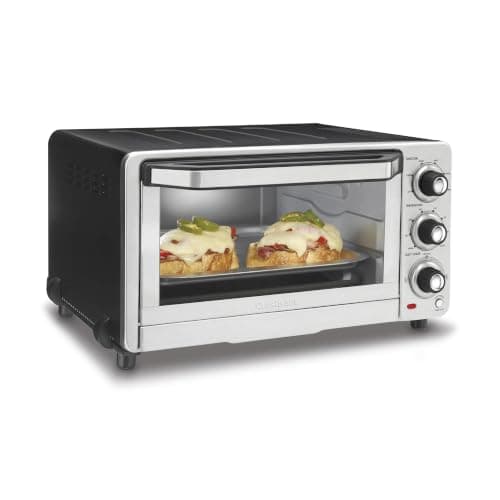
5. Cuisinart Custom Classic TOB-40N — the budget pick

Who it is for: the reader who concluded, reasonably, that a toaster should not cost three hundred dollars. Cuisinart's own copy states 1,800 watts and a 0.5-cubic-foot interior, there is an “Always Even Shade Control” on the toast setting, and the whole thing is three knobs, a bell and a timer with essentially nothing electronic to fail. It has been sold largely unchanged for over a decade, which in small appliances is the strongest reliability signal available short of taking one apart. It costs a small fraction of a BALMUDA and leaves the budget for the bread.

The cons. No steam, no fan, no published temperature range and no warranty term on a Cuisinart document — the 1,800-watt figure and the interior volume both come from Cuisinart's listing copy rather than a spec sheet, which is a rung below a published specification and labeled that way on the card. The 0.5 cubic foot interior is roughly half the cavity of Cuisinart's own Chef's Convection model at a similar wattage. And the dated look is not accidental. Our full review.

The honest summary

BALMUDA built a small, well-documented, single-purpose machine and charges accordingly, and nothing on this page is the same object. What you can do is decide which part of it you were buying. The steam has exactly one alternative here. The 1,300-watt-into-a-tiny-cavity heat density has exactly one alternative here, and it goes fifty degrees hotter. The documentation discipline has two, both of them Breville, and both of them larger. The price has one, and it is a radiant box with knobs.

What none of them have is a setting named after a croissant — and if that sounds like a joke, consider that a mode is just a time-and-temperature curve someone tested for you, which is the one thing a specification sheet can never show. Buy the mechanism if the mechanism is what you wanted. Buy the BALMUDA if the curve was.
In detail

The picks, in full

01
Our Place Our Place Wonder Oven (6-in-1, 13 Qt)

A small air fryer oven whose maker publishes everything

Our Place Wonder Oven (6-in-1, 13 Qt)

Wattage published in the manualInterior dimensions published200°F floor, 60-minute timer
7.7/10

The most completely documented small oven we have covered, from a brand better known for pans. Our Place publishes the rating-plate wattage, the temperature range, the interior dimensions and the warranty term — all four things we score documentation on. At 1,400 W it costs less per hour than the 1,800 W field; at four slices and a 9-inch pizza it is genuinely small; and the limits are published too — a 200°F floor and a 60-minute timer.

Power
7.5
Usable space
5
Footprint
9.5
Documentation
10
Value
6.5

What it gets right

  • Our Place publishes all four things we score documentation on — a rating-plate wattage in the manual, a temperature range, interior dimensions and a warranty term — and interior dimensions are the one almost nobody prints
  • 1,400 W draws about a fifth less per hour than the 1,800 W most full-power countertop ovens are rated at, and puts a lighter load on a kitchen circuit shared with a kettle or a coffee maker
  • A published 7.6-inch interior height in a box 11.5 inches wide, and the manual asks for only an inch of clearance above, behind and on each side

What it doesn't

  • The published floor is 200°F and the timer stops at 60 minutes, so there is no proofing, no dehydrating and no slow cook — the modes the Wonder Oven Pro adds are exactly the ones this one cannot reach
  • Small, and Our Place says so: four slices of toast, a 9-inch pizza, a pound of fries and two rack positions
  • None of the accessories is dishwasher safe — the manual says finishes may degrade — and the bake pan's non-stick is ceramic, which tends to lose its release faster with use than PTFE does

What it costs to run

About 25.7¢ an hour at full draw, or $46.86 a year at 30 minutes a day, 365 days a year and 18.34¢ per kWh.

1,400 W ÷ 1000 × 182.5 h × 18.34¢ = $46.86

120V 60Hz 1400W is the rating line printed on the cover of Our Place's own Wonder Oven user manual (model APL.WDO.ESN), which repeats 1400 W as the appliance rating an outlet must meet. This is an upper bound: the elements cycle off once the cavity is at temperature, and no manufacturer publishes a duty cycle, so we compute at full rated draw rather than invent a correction factor. The full method is published.

Skip this if…

…you want to proof dough, dehydrate, or cook anything for longer than an hour. The dial starts at 200°F and the timer stops at 60 minutes, and no mode on the knob changes either.

$149.00on Amazon

$185.0019% off

Price last checked November 22, 2026. Prices move constantly — Amazon's at checkout is the one that counts.

#ad · we may earn a commission from this link to Our Place Wonder Oven (6-in-1, 13 Qt)

02
Panasonic Panasonic FlashXpress Toaster Oven (NB-G110P)

The best-specified small oven here

Panasonic FlashXpress Toaster Oven (NB-G110P)

Fully specified by the manufacturerSmall interior
7.8/10

The most completely documented oven on this entire site relative to its size: 1,300 W, 120 V, 60 Hz, 7.2 quarts, 250–500°F, exact millimeter dimensions and a stated weight. Panasonic publishes all of it, and almost nobody else does.

Power
7
Usable space
5
Footprint
9.5
Documentation
10
Value
7.5

What it gets right

  • Panasonic publishes power, voltage, frequency, capacity, temperature range, dimensions and weight — the complete set, which no other brand here manages
  • 1,300 W and infrared elements means no preheat in the usual sense
  • 500°F ceiling in a 7.2-quart cavity is a genuinely high heat density

What it doesn't

  • 7.2 quarts is small — four slices, and a 9-inch pizza is optimistic
  • The infrared elements are not adjustable in the way a multi-element oven's are
  • Expensive for its size, and you are paying partly for the engineering discipline

What it costs to run

About 23.8¢ an hour at full draw, or $43.51 a year at 30 minutes a day, 365 days a year and 18.34¢ per kWh.

1,300 W ÷ 1000 × 182.5 h × 18.34¢ = $43.51

1300 W at 120 V / 60 Hz, published by Panasonic as a power consumption figure with the supply conditions stated — the most complete electrical specification of any oven on this site. This is an upper bound: the elements cycle off once the cavity is at temperature, and no manufacturer publishes a duty cycle, so we compute at full rated draw rather than invent a correction factor. The full method is published.

Skip this if…

…you need to cook for more than two. This is a beautifully specified small oven and it is still a small oven; no amount of documentation adds capacity.

$117.99on Amazon

$149.9921% off

Price last checked November 22, 2026. Prices move constantly — Amazon's at checkout is the one that counts.

#ad · we may earn a commission from this link to Panasonic FlashXpress Toaster Oven (NB-G110P)

03
Breville Breville Smart Oven Air Fryer Compact (BOV680BSS)

A fully documented 1,800 W in a small footprint

Breville Smart Oven Air Fryer Compact (BOV680BSS)

Wattage published in the manualNo published interior volume
8.0/10

The smallest oven on this site whose manufacturer publishes a rating-plate wattage, a temperature range and a stated toast and pizza-pan capacity — in an instruction book you can download before you spend anything. It is a genuinely small oven and Breville is unusually honest about how small, which is the whole reason it ranks where it does.

Power
9.5
Usable space
5.5
Footprint
8.5
Documentation
9.5
Value
7

What it gets right

  • Breville prints the rating plate figure in its own instruction book — 120 V ~ 60 Hz, 1,800 W — which makes this the smallest oven here you can compute a running cost for before you buy it
  • The published Bake & Roast floor is 120°F, which is unusually low for this category: holding a low set point is harder than getting hot, and it is what makes proofing and slow work possible in a cavity this size
  • Full 1,800 W in a chassis Breville measures at 15.7 inches wide — the same power as ovens half a foot wider

What it doesn't

  • Breville publishes no interior volume for this model, unlike the BOV900's stated cubic foot, so you compare it by pizza pan rather than by number
  • The manual's own note is that it fits an 11-inch pizza pan, with a 12-inch pan going in only with the rack in the upward orientation, and it toasts one to four slices — genuinely small, which Breville does not hide
  • 445°F is the published ceiling, below the 500°F several cheaper ovens reach, and that gap is real for thin-crust pizza and a hard finish on roast vegetables

What it costs to run

About 33.0¢ an hour at full draw, or $60.25 a year at 30 minutes a day, 365 days a year and 18.34¢ per kWh.

1,800 W ÷ 1000 × 182.5 h × 18.34¢ = $60.25

1800 W is the Rating Information line printed in Breville's own BOV680 instruction book — 120 V ~ 60 Hz 1800 W — not a marketing headline. This is an upper bound: the elements cycle off once the cavity is at temperature, and no manufacturer publishes a duty cycle, so we compute at full rated draw rather than invent a correction factor. The full method is published.

Skip this if…

…you cook for more than two, or you bake on a half-sheet pan. Four slices of toast and an 11-inch pizza pan is the published ceiling, and no function on the dial moves it.

$199.95on Amazon

$249.9520% off

Price last checked November 22, 2026. Prices move constantly — Amazon's at checkout is the one that counts.

#ad · we may earn a commission from this link to Breville Smart Oven Air Fryer Compact (BOV680BSS)

04
Breville Breville Smart Oven Pro (BOV845BSS)

Baking, if you bake seriously

Breville Smart Oven Pro (BOV845BSS)

Wattage published on the product page
8.4/10

No air fry function, which is the point. This is the convection oven from the range with the marketing layer removed — ten functions, 1,800 W, and a published 120°F floor on Bake and Roast: no Proof preset, but a stated low end most ovens in the category never print.

Power
9.5
Usable space
8
Footprint
8
Documentation
8.5
Value
8

What it gets right

  • A real slow-cook function and a published 120°F floor on Bake and Roast — a stated low end, which is the specification that matters if you bake bread
  • Same 1,800 W and same footprint as the BOV860 without paying for the air-fry basket
  • Breville publishes the wattage on the product page rather than burying it in the manual

What it doesn't

  • No Air Fry, Proof or Dehydrate preset — the three functions the BOV900 adds — so if any of them is on your list, this is the wrong model in the range
  • No published interior volume for this model either
  • Ten functions is still more than most people use

What it costs to run

About 33.0¢ an hour at full draw, or $60.25 a year at 30 minutes a day, 365 days a year and 18.34¢ per kWh.

1,800 W ÷ 1000 × 182.5 h × 18.34¢ = $60.25

1800 W as published by Breville on the Smart Oven Pro product page. This is an upper bound: the elements cycle off once the cavity is at temperature, and no manufacturer publishes a duty cycle, so we compute at full rated draw rather than invent a correction factor. The full method is published.

Skip this if…

…air frying is on your list at all. This is deliberately the model without it, and buying it then wishing it had one is the most predictable regret in the range.

$215.95on Amazon

$269.9520% off

Price last checked November 22, 2026. Prices move constantly — Amazon's at checkout is the one that counts.

#ad · we may earn a commission from this link to Breville Smart Oven Pro (BOV845BSS)

05
Cuisinart Cuisinart Custom Classic Toaster Oven Broiler (TOB-40N)

1,800 W without a control panel

Cuisinart Custom Classic Toaster Oven Broiler (TOB-40N)

Full 1,800 W
7.6/10

1,800 W behind three knobs. It has been sold essentially unchanged for over a decade, which in small appliances is the strongest reliability signal available short of taking one apart.

Power
9.5
Usable space
7
Footprint
7.5
Documentation
5
Value
9

What it gets right

  • Full 1,800 W at well under half what an 1,800 W Breville costs
  • Knobs, a bell and a timer — there is essentially nothing here to fail electronically
  • A production run long enough that its failure modes are well known

What it doesn't

  • No convection fan
  • The only interior volume Cuisinart publishes for it — 0.5 cu. ft. — is in its Amazon listing title, not on a spec sheet, and it is roughly half the cavity of the Chef's Convection model at a similar wattage
  • The dated look is not accidental; this design has not changed in years

What it costs to run

About 33.0¢ an hour at full draw, or $60.25 a year at 30 minutes a day, 365 days a year and 18.34¢ per kWh.

1,800 W ÷ 1000 × 182.5 h × 18.34¢ = $60.25

1800 Watt as stated in Cuisinart's own listing title and copy. Cuisinart publishes no separate spec sheet for this model, so this is brand-supplied rather than manual-verified. This is an upper bound: the elements cycle off once the cavity is at temperature, and no manufacturer publishes a duty cycle, so we compute at full rated draw rather than invent a correction factor. The full method is published.

Skip this if…

…you want convection or air fry. This is a radiant oven, and everything the rest of this site says about moving air does not apply to it.

$99.95on Amazon

$129.9523% off

Price last checked November 22, 2026. Prices move constantly — Amazon's at checkout is the one that counts.

#ad · we may earn a commission from this link to Cuisinart Custom Classic Toaster Oven Broiler (TOB-40N)

Steam in a toaster is a humidity trick, not a steam oven

Five cubic centimeters of water is a teaspoon. Flashed to vapor in a cavity this size it briefly raises the surface humidity, which delays the crust setting and lets the inside stay soft while the outside browns — the same mechanism a bakery steam injector uses, at a thousandth of the scale. It is a real effect and it is also a small one, and no countertop machine at any price is a combi steam oven. An oven that publishes a steam function and a water quantity is telling you it does the trick; an oven that publishes a boiler volume is telling you how much. What steam does to a crust, and how to fake it with a tray.

Heat density is the number to compare, and you can compute it

Watts divided by cavity volume tells you more about how an oven browns than any function list. BALMUDA puts 1,300 W into about 11.6 quarts. Panasonic puts 1,300 W into 7.2 quarts, which is a higher density. Breville's Compact puts 1,800 W into a cavity it does not quantify. A big cheap oven with a modest element set is the combination that disappoints people, and it is also the combination you cannot detect from a preset count. Every published wattage on this site, with its source document.

Check the floor, not just the ceiling

Everything on this page gets hot enough to toast. What separates them at the bottom: both Brevilles publish 120°F, Our Place 200°F, Panasonic 250°F, and BALMUDA's lowest Classic setting is 170°C, or 338°F. If you want to proof dough, hold a plate warm or dry herbs, that is the figure that decides it — and the one oven here that publishes no floor at all is also the cheapest. What a dehydrate setting actually needs.

Price the accessories before you compare the ovens

BALMUDA's US listing states that the baking tray is sold separately, which is a normal thing for a product sold as a toaster and an abnormal thing in this category — every oven below ships with its racks and pans in the box. When you compare two prices, make sure you are comparing two complete ovens. The toaster ovens ranked on published specs overall.

How we picked

Ovens we claim to have cooked in: 0

Everyone in this category tells you they roasted forty chickens. We have roasted none, and we say so. Here is what we do instead: read the manufacturer's manual and spec sheet, record the published wattage, interior volume, temperature range and warranty term, work out what the oven costs to run for an hour and for a year, show the arithmetic so you can redo it with your own electricity rate, and cite all of it. Where a brand publishes no wattage, we print no running cost rather than borrowing a number from a similar model. Prices come live from Amazon's API and disappear rather than go stale.

The scores above are judgments from that documented research — not test results. One of the five metrics is Documentation: whether the manufacturer will tell you what its oven draws at all. The full rubric, including what disqualifies an oven, is published in full.

Questions

Frequently asked

Is there a cheaper alternative to the BALMUDA The Toaster?
Every oven on this page costs less, and the Cuisinart Custom Classic costs a small fraction. The closest in behavior is the Panasonic FlashXpress, which Panasonic rates at the same 1,300 watts as BALMUDA, in a cavity of a similar size, with a published 250–500°F band. What no cheaper oven gives you is the steam boiler or the bread-named modes. The budget end of the category, ranked on price.
Which toaster ovens have a steam function?
In this catalog, Our Place does — the Wonder Oven, the Large Wonder Oven and the Pro all list steam among their functions, and no other brand we cover publishes one at all. That is why the Wonder Oven leads this page. BALMUDA's approach is different in kind: it publishes a 5cc boiler volume rather than a function name and a water quantity. Our Place alternatives, if that brand is the one you are leaving.
Does any oven match BALMUDA's 1,300 watts?
The Panasonic FlashXpress is rated at 1,300 W at 120 V, 60 Hz on Panasonic's own product page, which is the same figure BALMUDA publishes on its specification page. Most of this category sits at 1,500 or 1,800 W, so a 1,300-watt oven draws noticeably less: about 23.8¢ an hour at 18.34¢ per kWh against 33.0¢. Cost per hour and per year, with the sum written out.
Is the BALMUDA worth it, or should I buy an alternative?
We have not cooked in one, so we will not score it. What we can say from the documents is that BALMUDA publishes more about its toaster than most brands in this category publish about theirs, including figures — a boiler volume, interior dimensions, a cord length — that almost nobody prints. If you want the steam mechanism and the bread-type modes, nothing here replaces them. If you want heat density, a low temperature floor, more capacity or a lower price, something here does, and this page says which. Our toast-first ranking.
Is a BALMUDA alternative better for more than toast?
Almost certainly, and that is the clearest argument for leaving. BALMUDA's timer stops at 15 minutes and its Classic mode offers two temperatures; the Breville Smart Oven Pro publishes ten functions and a 120°F floor, and the Our Place and Breville Compact both publish a temperature band you can set anywhere inside. If the oven has to bake and roast as well as toast, buy one built to. The 6-slice ovens, if capacity turns out to be the real constraint.

Keep reading

Receipts

Sources

We have not cooked in these ovens and we do not pretend to have. Specifications come from the manufacturer's own published documents; electricity rates come from the US Energy Information Administration; prices come from the live Amazon API. Where a figure is not published, the page says “not published” rather than guessing. Read the full method.