Skip to content
CC

HUB 03 · Toaster Ovens

The Best Digital Toaster Ovens

A dial sets an approximation; a digital panel sets a number. That only matters if the maker tells you which numbers — the low end of the band and the top of the timer — and most of this category does not. These are the ovens whose makers do.

By Stephen V.Updated How we rank
#ad

We earn a commission if you buy through our links. It does not change the price you pay, and it does not decide our picks — the scoring rubric is published in full, including what disqualifies an oven. How this works.

The short answer

Quick picks

#OvenBest forScorePrice
01
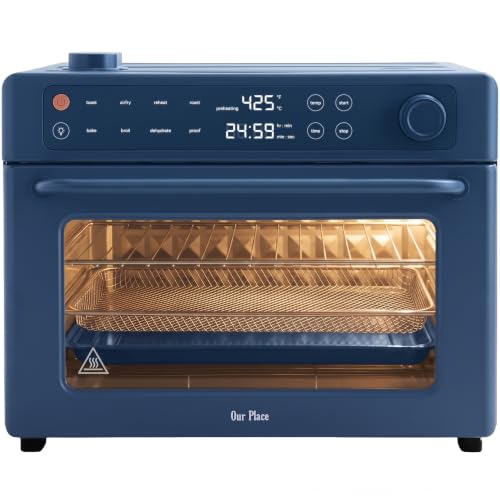
Our Place Our Place Wonder Oven Pro (8-in-1, 28 L)
Our Place Wonder Oven Pro (8-in-1, 28 L)

A published 80°F floor and a 24-hour timer

1,700 W
7.9
$275.00Amazon
02
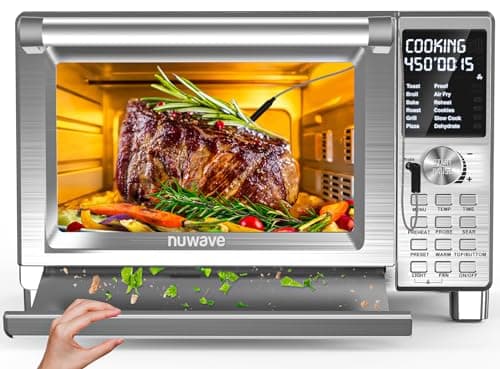
Nuwave Nuwave Bravo XL Pro Air Fryer Toaster Oven (30 Qt, with probe)
Nuwave Bravo XL Pro Air Fryer Toaster Oven (30 Qt, with probe)

The most oven around a probe for the money

1,800 W
7.7
$167.96Amazon
031,800 W
8.2
$149.99Amazon
04
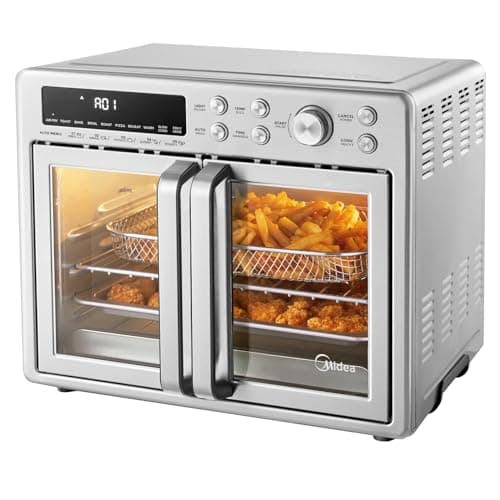
Midea Midea Flexify French Door Air Fryer Oven (MET26C3AST, 26.4 Qt)
Midea Flexify French Door Air Fryer Oven (MET26C3AST, 26.4 Qt)

The only French-door oven whose maker publishes a temperature range

Wattage not published
6.9
$139.97Amazon
05
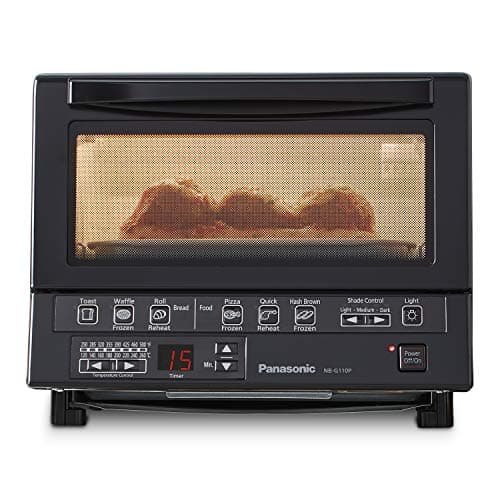
Panasonic Panasonic FlashXpress Toaster Oven (NB-G110P)
Panasonic FlashXpress Toaster Oven (NB-G110P)

The best-specified small oven here

1,300 W
7.8
$117.99Amazon

#ad · Prices pulled live from the Amazon Product API, last checked November 22, 2026. Where we have no verified live price we show none — we would rather leave a gap than print a number that has gone stale. The wattage column is what the manufacturer publishes; “not published” means exactly that, and we have not estimated one. Scores are ours, compiled from published specifications, and are not test results.

The short answer

Buy the Our Place Wonder Oven Pro. It is for the cook who wants the panel to reach places a dial cannot: Our Place publishes an 80–450°F range and a 30-second-to-24-hour timer, which is the only published control specification in this catalog that permits proofing, dehydrating and an all-day cook on paper rather than by reputation. If you want the widest published band for the least money, the Nuwave Bravo XL Pro prints 50–500°F in 5°F increments — lower at the bottom and higher at the top — and adds a probe. The budget pick is the Panasonic FlashXpress: the cheapest oven here whose maker publishes both a rated wattage and a numeric temperature band, at 1,300 W and 250–500°F.

We have not cooked in any of these. Our rubric says so in those words. Everything below comes off a manufacturer document.

Why “digital” is usually an unrankable claim — and what we rank instead

Control type is one of the least documented things in this category. Makers show you a photograph of a panel and almost never publish what the panel can be set to, which is why this site has twice declined to build this page: “has buttons” is not a specification, and a roundup of ovens with LEDs on them would be a reshuffle of our main ranking.

There is a criterion, though, and it is a hard one. A digital controller exists to hit a number and hold it for a stated time. So the test is simply whether the maker publishes those two numbers: the set point band, including its floor, and the timer range. On that test the field collapses from dozens of ovens to five, and the ranking writes itself. An oven with a beautiful panel and no published band is being sold on a photograph.

OvenPublished bandPublished incrementsPublished timerRated powerPer hourPrice
Our Place Wonder Oven Pro80–450°FNot published30 seconds to 24 hours1700 W31.2¢$275.00on Amazon
Nuwave Bravo XL Pro50–500°F5°FNot published as a range1800 W (brand Q&A)33.0¢$167.96on Amazon
Ninja SP101Not publishedNot publishedNot published1800 W33.0¢$149.99on Amazon
Midea Flexify MET26C3AST100–450°F5°F temp, 1 minute timerNot published as a rangeNot published—$139.97on Amazon
Panasonic FlashXpress250–500°FNot publishedNot published as a range1300 W23.8¢$117.99on Amazon

Every price in the table above and on every card below was last checked November 22, 2026, read from the same live price layer the buy buttons read. Only one oven in this entire catalog publishes a timer RANGE, and it is in the first row. Amazon moves these daily and the price at checkout is the one that counts — where a row says “Check price”, we had no verified offer at that check and we would rather show a gap than a number we cannot stand behind.

Per-hour figures are the published wattage times 18.34¢ per kWh, the US average residential rate for June 2026, and they are an upper bound rather than a bill. Every published wattage on this site, with its source.

The finding is that increments, not displays, are where digital control earns its money. Two makers here publish a 5°F step. That is the figure that separates a panel from a dial in practice: a dial between 300 and 350 is a guess, while a 5°F increment is a decision. And exactly one maker in this catalog publishes a timer range at all — every other oven's timer length is something you discover after the box is open.

1. Our Place Wonder Oven Pro — the only published 24-hour timer

Who it is for: the cook whose reason for wanting buttons is proofing, dehydrating or a long low cook. Our Place publishes 1700W / 120V, an 80–450°F band, a 30-second-to-24-hour timer, 28 litres, eight functions, three rack levels and a one-year term — and it is the only control specification in this catalog whose own numbers permit all three of those jobs without you having to assume anything.

The cons. Its stated 28-litre capacity does not agree with the interior dimensions printed beside it, and we flag that on the card rather than repeating one of the two numbers. It draws 1,700 W against the standard Wonder Oven's 1,400 W, so the capability costs you 5.5¢ an hour more at the top of the band. No increment figure is published, so the step size behind that lovely panel is unstated. And the price is near the top of this catalog. Our full review.

2. Nuwave Bravo XL Pro — the widest published band, in 5°F steps

Who it is for: anyone who wants the number the panel sets to be the number they chose. 50–500°F published, in 5°F increments, plus a probe that per Nuwave's manual stops the oven at a target between 50°F and 212°F rather than displaying a reading. Interior and exterior dimensions, weight, 30 quarts and four rack levels, all published.

The cons. The 1,800 W figure is a Nuwave Q&A answer on its own product page, not a rating line in the manual, and we say so on the card. No timer range is published, so the Pro's 24-hour figure above is not matched on paper. Twelve functions plus a hundred recipe presets is marketing depth. One-year warranty, original purchaser only, continental US only. Our full review.

3. Ninja SP101 — the digital oven that folds away

Who it is for: the small kitchen that wants 1,800 W and will not accept a permanent box on the counter. SharkNinja publishes a rated 1,800 W in its own quick start guide — which most of the Ninja line does not get — across eight digital functions, and the chassis flips vertically against the backsplash when you are done. That is a real solution to the only problem this category reliably creates.

The cons. No published temperature band, no published increment and no published interior volume, so on this page's own criterion it ranks third on a wattage rather than on a control specification. The folding mechanism is what you are paying for over a fixed oven, and it is worthless if the oven never folds. One rack level in the published configuration. Our full review.

4. Midea Flexify (MET26C3AST) — the published increment, at the lowest price

Who it is for: the buyer who wants a real set point and a French door for well under two hundred dollars. Midea publishes a 100–450°F band with 5°F temperature steps and 1-minute timer steps, 26.4 quarts, a weight, ten presets and the accessory list — the most complete control specification on any French-door oven in this catalog.

The cons. Midea publishes no rated wattage, so this site prints no running cost for it and the electricity arithmetic every other page performs cannot be performed here — on an oven sold on its panel, that is a real gap. No published interior dimensions and no published warranty term. 450°F ceiling. Our full review.

5. Panasonic FlashXpress — the budget pick

Who it is for: one or two people who want a number-setting oven and the most completely specified small appliance in this catalog. Panasonic publishes 1,300 W, 120 V 60 Hz, 7.2 quarts, 250–500°F and exact millimetre dimensions — the cheapest oven here that publishes both a rated wattage and a numeric band, and at 1,300 W the cheapest to run of the five at 23.8¢ an hour as an upper bound.

The cons. The 250°F floor is the highest on this page by a long way, which puts proofing and dehydrating out of reach — so the one thing people most often buy digital control for is the thing this oven cannot do. 7.2 quarts is a small interior and documentation does not add capacity. No published increment, no published timer range. Our full review.

The honest summary

If you are searching for a digital toaster oven, you are probably trying to stop guessing at a dial. The thing to buy is not a panel — it is a published band with a published increment, and only two makers in this catalog give you both. Everything else labelled digital is asking you to take the controller on trust, which is the same trust a dial asks for at a lower price.

If what you actually want is the opposite — three knobs and nothing to fail — the budget tier is almost entirely manual and says so, and the ovens that deliberately skip the feature list is the page for buying less on purpose.

In detail

The picks, in full

01
Our Place Our Place Wonder Oven Pro (8-in-1, 28 L)

A published 80°F floor and a 24-hour timer

Our Place Wonder Oven Pro (8-in-1, 28 L)

80°F floor and a 24-hour timer publishedInterior dimensions publishedStated volume disagrees with its own interior
7.9/10

The standard Wonder Oven with both of its published limits removed. Our Place prints 1700W / 120V, an 80–450°F range and a 30-second-to-24-hour timer, which makes it the only oven here whose own spec sheet permits proofing, dehydrating and an all-day cook. The catch is that its stated 28-liter capacity does not agree with the interior dimensions printed beside it.

Power
9
Usable space
8.5
Footprint
7.5
Documentation
8.5
Value
6

What it gets right

  • A published 80°F floor with named Proof and Dehydrate modes, and a timer Our Place states runs from 30 seconds to 24 hours — the only oven in our catalog whose own spec sheet allows proofing, drying and an all-day cook
  • Our Place publishes interior AND exterior dimensions, a weight, a rack count, a timer range and a temperature range, which is more of the spec sheet than almost any brand at any price prints
  • A 12-inch pizza or a whole chicken across three rack levels, in a box 16.75 inches wide — more usable room than the standard Wonder Oven in a footprint that is still under 17 inches

What it doesn't

  • The stated 28 liters does not follow from the interior Our Place prints next to it: 13.75 x 13 x 7.75 inches multiplies out to about 1,385 cubic inches, or roughly 22.7 liters
  • 1,700 W draws about 14.2 amps at 120 V, so it uses nearly the whole of a 15-amp kitchen circuit and costs only marginally less per hour than an 1,800 W oven
  • Our Place publishes no toast-slice count for it, and no rating-plate wattage we could read in a manual — the standard Wonder Oven's review could cite both

What it costs to run

About 31.2¢ an hour at full draw, or $56.90 a year at 30 minutes a day, 365 days a year and 18.34¢ per kWh.

1,700 W ÷ 1000 × 182.5 h × 18.34¢ = $56.90

1700W at 120V, published by Our Place in the specifications block of its own Wonder Oven Pro product page. Unlike the standard Wonder Oven we could not read a rating line off the manual cover — Our Place hosts no PDF and the third-party copies refuse automated requests — so this is a product-page figure rather than a rating-plate one. This is an upper bound: the elements cycle off once the cavity is at temperature, and no manufacturer publishes a duty cycle, so we compute at full rated draw rather than invent a correction factor. The full method is published.

Skip this if…

…you want the lowest running cost in a small oven, or you want a figure you can reconcile. The standard Wonder Oven draws 1,400 W and its published interior dimensions multiply out to the volume it claims; this one draws 1,700 W and its do not.

$275.00on Amazon

$325.0015% off

Price last checked November 22, 2026. Prices move constantly — Amazon's at checkout is the one that counts.

#ad · we may earn a commission from this link to Our Place Wonder Oven Pro (8-in-1, 28 L)

02
Nuwave Nuwave Bravo XL Pro Air Fryer Toaster Oven (30 Qt, with probe)

The most oven around a probe for the money

Nuwave Bravo XL Pro Air Fryer Toaster Oven (30 Qt, with probe)

Interior dimensions publishedWattage from a brand Q&A answer, not the manual
7.7/10

A 30-quart, four-rack-level convection oven with an integrated temperature probe that stops the cook at a set internal temperature, and a maker that publishes its interior and exterior dimensions, weight, capacity, temperature range and warranty term — most of which the Ninja probe ovens do not. The 1,800-watt figure comes from a Nuwave support answer on its own product page rather than the manual's rating line, and we say so.

Power
8
Usable space
9
Footprint
6
Documentation
7
Value
8.5

What it gets right

  • An integrated probe that stops the oven at a target between 50°F and 212°F — per the manual, not a preset that merely displays a reading
  • Nuwave publishes both outer and inner dimensions, weight, capacity and a 50–500°F range; its own FAQ states a standard 13 x 9 x 3 inch pan fits
  • Four rack levels in a 30-quart cavity — Nuwave's own figures are a 10 lb chicken or two 13-inch pizzas — for well under either probe-equipped Ninja

What it doesn't

  • The 1,800 W figure is a Nuwave support answer on the product page, not a rating line in the manual or a row in the spec table
  • 12 functions plus 100 recipe presets is deep into the territory where the count is marketing
  • One-year limited warranty, valid only for the original purchaser and only in the continental US per the manual

What it costs to run

About 33.0¢ an hour at full draw, or $60.25 a year at 30 minutes a day, 365 days a year and 18.34¢ per kWh.

1,800 W ÷ 1000 × 182.5 h × 18.34¢ = $60.25

1800 watts, or 15 amps, as stated by Nuwave in its own answer (dated 06/30/2026) to a customer question on the Bravo XL Pro product page. The model 20813 owner's manual and the page's specification table give the supply as 120 V but print no wattage, so this is brand-supplied rather than a rating-plate reproduction. This is an upper bound: the elements cycle off once the cavity is at temperature, and no manufacturer publishes a duty cycle, so we compute at full rated draw rather than invent a correction factor. The full method is published.

Skip this if…

…you do not roast to an internal temperature. Everything this oven does better than a cheaper 30-quart box is the probe and the four rack levels; if you mostly air fry vegetables and reheat, a smaller oven with a rating-plate wattage is the better-documented buy.

$167.96on Amazon

$219.9924% off

Price last checked November 22, 2026. Prices move constantly — Amazon's at checkout is the one that counts.

#ad · we may earn a commission from this link to Nuwave Bravo XL Pro Air Fryer Toaster Oven (30 Qt, with probe)

03
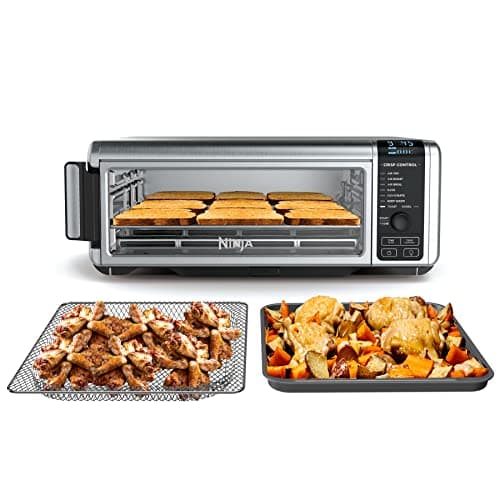
Ninja Ninja Digital Air Fryer & Toaster Oven, 8-in-1 flip-away (SP101)

Small counters that still want 1,800 W

Ninja Digital Air Fryer & Toaster Oven, 8-in-1 flip-away (SP101)

Stores vertically
8.2/10

The one genuine answer to a small kitchen that does not involve giving up power. It flips vertically against the backsplash when you are done, which is a real solution to the only problem this category consistently creates.

Power
9.5
Usable space
6.5
Footprint
9.5
Documentation
7
Value
8.5

What it gets right

  • Flipping up against the backsplash reclaims the counter without unplugging and lifting a 20-pound box into a cupboard
  • Full 1,800 W — the compromise is storage geometry, not power
  • Capacity is quoted as a 13-inch pizza and nine slices, both of which you can check against what you actually cook

What it doesn't

  • The flip-away design means a shallow single cooking level; there is no second rack position to gain
  • The hinge and the vertical stance are the whole product — if you were always going to leave it out, you are paying for a mechanism you will not use
  • No published interior volume, same as the rest of the Ninja line

What it costs to run

About 33.0¢ an hour at full draw, or $60.25 a year at 30 minutes a day, 365 days a year and 18.34¢ per kWh.

1,800 W ÷ 1000 × 182.5 h × 18.34¢ = $60.25

1800 W as published in SharkNinja's own SP101 quick start guide and brand listing copy. This is an upper bound: the elements cycle off once the cavity is at temperature, and no manufacturer publishes a duty cycle, so we compute at full rated draw rather than invent a correction factor. The full method is published.

Skip this if…

…you have the counter space to leave an oven out permanently — you would be paying for a folding mechanism instead of interior room, and the French-door FO101 gives you a bigger cavity for less.

$149.99on Amazon

$249.9940% off

Price last checked November 22, 2026. Prices move constantly — Amazon's at checkout is the one that counts.

#ad · we may earn a commission from this link to Ninja Digital Air Fryer & Toaster Oven, 8-in-1 flip-away (SP101)

04
Midea Midea Flexify French Door Air Fryer Oven (MET26C3AST, 26.4 Qt)

The only French-door oven whose maker publishes a temperature range

Midea Flexify French Door Air Fryer Oven (MET26C3AST, 26.4 Qt)

Capacity, exterior and weight publishedPublished 100–450°F rangeNo published wattage
6.9/10

The most completely documented French-door oven in this catalog, and also the cheapest of the four. Midea publishes a capacity, an exterior, a weight, ten named presets and a stated fit, and its own listing copy publishes a 100-450°F band — the only published temperature range on any French-door oven here. It still does not publish a rated wattage, which is the one number the running-cost arithmetic needs, so this is the best-documented oven in a badly documented field rather than a well-documented oven.

Power
5
Usable space
7
Footprint
6.5
Documentation
7
Value
9

What it gets right

  • The only French-door oven in this catalog whose maker publishes a temperature range at all — 100–450°F, against no published figure whatsoever from Oster, Emeril or Elite Gourmet
  • A published 100°F floor is low enough for the Dehydrate preset Midea names, which no other French-door oven here can demonstrate on paper
  • Ten named presets including Slow Cook and Dehydrate, listed individually by Midea rather than summed into a marketing number
  • The cheapest of the four French-door ovens on this site, and simultaneously the one with the most published about it
  • Published fit is stated in objects rather than adjectives: one 12-inch pizza, six slices of toast, fourteen wings

What it doesn't

  • No rated wattage published by Midea anywhere we could read, so this site shows no running cost for it — the only figure in circulation is 1,750 W from a third-party review, which is not a manufacturer source
  • Midea's own specification block gives a product weight of 25.57 lb and a shipping weight of 20.94 lb, which cannot both be right for a boxed appliance; Amazon's item data for the same model says 20.9 lb
  • No published interior dimensions, so whether a specific pan fits cannot be checked before buying — only the 12-inch-pizza claim stands in for it
  • Midea publishes no warranty term on the US product page for this model
  • Capacity is not stable across Midea's own regions: the Canadian listing for the same model family is sold as 25 qt

What it costs to run

Midea publishes no wattage for this oven in any document we could find, so we do not show a running-cost figure for it. We are not going to estimate one from a similar model. Here is the method we would have used.

Skip this if…

…you need to know what it costs to run before you buy it. Midea publishes no rated wattage for this oven, so the electricity arithmetic every other page on this site performs cannot be performed here — if that number matters to you, buy an oven whose maker prints it.

$139.97on Amazon

$179.9922% off

Price last checked November 22, 2026. Prices move constantly — Amazon's at checkout is the one that counts.

#ad · we may earn a commission from this link to Midea Flexify French Door Air Fryer Oven (MET26C3AST, 26.4 Qt)

05
Panasonic Panasonic FlashXpress Toaster Oven (NB-G110P)

The best-specified small oven here

Panasonic FlashXpress Toaster Oven (NB-G110P)

Fully specified by the manufacturerSmall interior
7.8/10

The most completely documented oven on this entire site relative to its size: 1,300 W, 120 V, 60 Hz, 7.2 quarts, 250–500°F, exact millimeter dimensions and a stated weight. Panasonic publishes all of it, and almost nobody else does.

Power
7
Usable space
5
Footprint
9.5
Documentation
10
Value
7.5

What it gets right

  • Panasonic publishes power, voltage, frequency, capacity, temperature range, dimensions and weight — the complete set, which no other brand here manages
  • 1,300 W and infrared elements means no preheat in the usual sense
  • 500°F ceiling in a 7.2-quart cavity is a genuinely high heat density

What it doesn't

  • 7.2 quarts is small — four slices, and a 9-inch pizza is optimistic
  • The infrared elements are not adjustable in the way a multi-element oven's are
  • Expensive for its size, and you are paying partly for the engineering discipline

What it costs to run

About 23.8¢ an hour at full draw, or $43.51 a year at 30 minutes a day, 365 days a year and 18.34¢ per kWh.

1,300 W ÷ 1000 × 182.5 h × 18.34¢ = $43.51

1300 W at 120 V / 60 Hz, published by Panasonic as a power consumption figure with the supply conditions stated — the most complete electrical specification of any oven on this site. This is an upper bound: the elements cycle off once the cavity is at temperature, and no manufacturer publishes a duty cycle, so we compute at full rated draw rather than invent a correction factor. The full method is published.

Skip this if…

…you need to cook for more than two. This is a beautifully specified small oven and it is still a small oven; no amount of documentation adds capacity.

$117.99on Amazon

$149.9921% off

Price last checked November 22, 2026. Prices move constantly — Amazon's at checkout is the one that counts.

#ad · we may earn a commission from this link to Panasonic FlashXpress Toaster Oven (NB-G110P)

The floor is the number that changes what you can cook

Everything in this category reaches 450°F. Almost nothing publishes the bottom of the band, and the bottom is what proofing, dehydrating, yoghurt and holding a finished dish all need. Of the five ovens here, two publish a floor under 150°F and one publishes 250°F — a hundred degrees of difference that no product photograph shows. What a low published floor actually lets you do.

Ask for the increment, not the display

A digital panel that steps in 25°F jumps is a dial with better lighting. A 5°F increment is a genuinely different instrument, and two makers in this catalog publish one. Where no increment is published, assume the step is coarse — it is the sort of figure a maker prints when it flatters them.

A long timer is rarer than a low temperature

Exactly one oven in this catalog publishes a timer range, and it runs to 24 hours. Most budget ovens top out between 15 and 60 minutes, published or not: the Elite Gourmet ovens print 15 and 30 minutes, and the standard Wonder Oven prints 60. If you intend to dehydrate anything, the timer is the constraint before the temperature is. How these timers actually behave at the end of a cycle.

Digital control does not change the running cost

A panel does not draw meaningful power. What changes your bill is the rated wattage and how long the elements stay energized, which is why the cheapest oven on this page is also the cheapest to run — it is a 1,300 W oven, not a 1,800 W one. The toaster-oven running-cost arithmetic, written out.
How we picked

Ovens we claim to have cooked in: 0

Everyone in this category tells you they roasted forty chickens. We have roasted none, and we say so. Here is what we do instead: read the manufacturer's manual and spec sheet, record the published wattage, interior volume, temperature range and warranty term, work out what the oven costs to run for an hour and for a year, show the arithmetic so you can redo it with your own electricity rate, and cite all of it. Where a brand publishes no wattage, we print no running cost rather than borrowing a number from a similar model. Prices come live from Amazon's API and disappear rather than go stale.

The scores above are judgments from that documented research — not test results. One of the five metrics is Documentation: whether the manufacturer will tell you what its oven draws at all. The full rubric, including what disqualifies an oven, is published in full.

Questions

Frequently asked

What is the best digital toaster oven?
The Our Place Wonder Oven Pro, on published figures: it is the only oven in this catalog whose maker publishes both the set point band (80–450°F) and the timer range (30 seconds to 24 hours) its panel reaches. If you want the widest band for less money, the Nuwave Bravo XL Pro publishes 50–500°F in 5°F increments.
Are digital toaster ovens better than dial ones?
Only where the maker publishes what the panel can be set to. A digital controller that steps in coarse jumps and has no published floor is a dial with a screen. Where you get a published band and a published increment — two ovens here do — the difference is real: a set point you chose instead of a mark you aimed at. The category ranked without the control-type frame.
What is the cheapest digital toaster oven with a published temperature range?
In this catalog, the Panasonic FlashXpress — the budget pick here, publishing 1,300 W and a 250–500°F band. The catch is the floor: 250°F is too warm for proofing or dehydrating, which is often exactly why people want digital control.
Do digital toaster ovens use more electricity than manual ones?
No. The control board draws a negligible amount; the elements draw everything. The cheapest oven to run on this page is the 1,300 W Panasonic at about 23.8¢ an hour as an upper bound, against 33.0¢ for the 1,800 W ovens — and that gap is about the elements, not the panel. The published wattages, by model.

Keep reading

Receipts

Sources

We have not cooked in these ovens and we do not pretend to have. Specifications come from the manufacturer's own published documents; electricity rates come from the US Energy Information Administration; prices come from the live Amazon API. Where a figure is not published, the page says “not published” rather than guessing. Read the full method.