The short answer
Buy the BLACK+DECKER TO3250XSB. It is for anyone who wants the fit in writing and does not want to pay for anything else: BLACK+DECKER states a 9 x 13 pan with handles and a 12-inch pizza on its own product page, publishes a 1500 W rating line in its own manual, a 22 x 14.5 x 11.5 inch exterior, 12.1 lb and a two-year warranty — for under a hundred dollars. It is also the budget pick, because it is the cheapest oven here and the top one, which is the finding of this page rather than a coincidence. If you want the same fit with fifteen functions and a published interior volume, the Cuisinart Chef's Convection TOB-260N1 states a 9x13 pan, a 13-inch pizza and nine slices beside 1,800 watts and 0.95 cubic feet.
We have not put a pan in any of these. Our rubric says so in those words — every fit below is a manufacturer statement or arithmetic off dimensions a manufacturer published, labelled as which.
Why the 9x13 is the only capacity question worth asking
A 9x13 inch pan is the standard American baking dish: lasagne, sheet cake, roast vegetables, a tray of chicken thighs. It is also the only capacity spec a buyer can verify from their own kitchen, because you already own one and you can measure it. A quart figure cannot be checked against anything — it is a volume, and volume says nothing about shape.
The catch is that a 9x13 pan is not 9 by 13 inches. With the rim and the handles most pans measure closer to 10 x 14.5 inches, and the oven needs clearance beyond that for the rack supports and the walls. So an oven that can take a 9x13 pan needs roughly 14 to 15 inches of clear interior width, and fewer ovens clear that than the quart numbers suggest. Five in this catalog have a published basis for it.
| Oven | Basis for the fit | Stated by the maker? | Rated power | Per hour | Price |
|---|
| BLACK+DECKER TO3250XSB | “9 x 13 pan with handles”, plus a 12" pizza | Yes — product page | 1500 W (rating plate) | 27.5¢ | Check price on Amazon → |
|---|
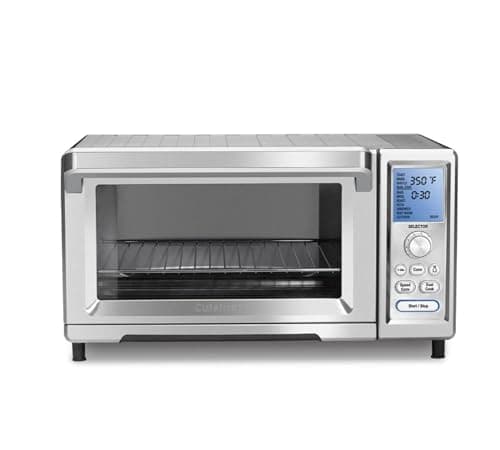
| Cuisinart TOB-260N1 | 9x13 pan, 13" pizza, nine slices; 0.95 cu ft | Yes — product page | 1800 watts | 33.0¢ | $212.24·on Amazon |
|---|
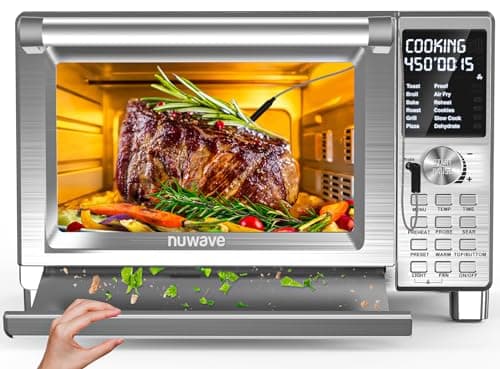
| Nuwave Bravo XL Pro | “standard 13 x 9 x 3 inch pan”; 14.50 x 13 x 7.625 in. interior | Yes — brand FAQ | 1800 W (brand Q&A) | 33.0¢ | $167.96·on Amazon |
|---|
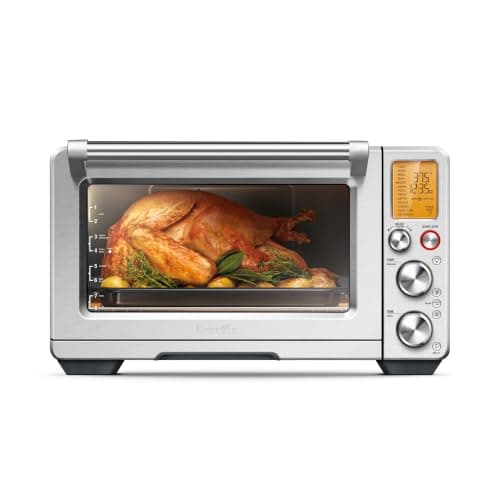
| Breville BOV900 | 14" pizza or a 9x13 pan; 1 cubic ft | Yes — instruction book | 1800 W (rating plate) | 33.0¢ | $319.95·on Amazon |
|---|
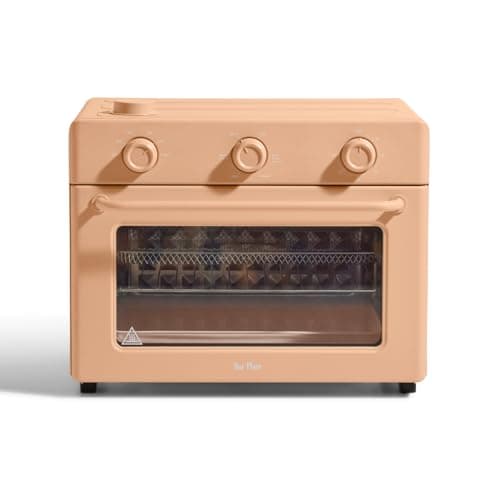
| Our Place Large Wonder Oven | 13.75 x 13 x 7.75 in. interior — our arithmetic | No — dimensions only | 1700 W | 31.2¢ | $175.00·on Amazon |
|---|
Every price in the table above and on every card below was last checked November 22, 2026, read from the same live price layer the buy buttons read. Four of the five fits are stated by the maker; the fifth is arithmetic off published dimensions and is labelled as such. Amazon moves these daily and the price at checkout is the one that counts — where a row says “Check price”, we had no verified offer at that check and we would rather show a gap than a number we cannot stand behind.
Per-hour figures are the published wattage times 18.34¢ per kWh, the US average residential rate for June 2026, and they are an upper bound rather than a bill. Every published wattage on this site, with its source.
The uncomfortable part is that the cheapest oven on this page is the one that publishes the pan. The TO3250XSB costs a fraction of the Breville and the Cuisinart and states the same fit in plainer language, and it does it on a page where it also publishes a rating line, exact exterior dimensions, a weight and a two-year term. What the expensive ovens buy you is element control, a published interior volume and a longer life — all real, none of them about the pan.
1. BLACK+DECKER TO3250XSB — the published fit, and the budget pick
Who it is for: the household that wants to put a lasagne in a countertop oven and spend as little as possible doing it. BLACK+DECKER states a 9 x 13 pan with handles — note the handles, which is the detail most makers leave out and the one that actually decides it — alongside eight slices, a 12-inch pizza, a 22 inch width, a 1500 W rating line in the manual and two years of warranty.
The cons. It is a convection baker and not an air fryer: no basket, no air-fry setting. It publishes no interior volume, so the fit statement is the only capacity figure you get. The controls are dials, and a knob thermostat is an approximation rather than a set point. And it is 22 inches wide, the widest footprint on this page by two inches. Our full review.
2. Cuisinart Chef's Convection TOB-260N1 — the fit plus a published interior
Who it is for: the cook who wants the pan fit and wants to compare the cavity to a Breville's on paper. Cuisinart publishes a 9x13 pan, a 13-inch pizza and nine slices next to 1,800 watts and 0.95 cubic feet — the only oven in this catalog whose maker gives you both a power figure and a volume figure in the same place. Fifteen functions, dual rack positions.
The cons. At 530 mm it is the deepest oven in this catalog, which is the dimension people forget to measure until the door will not clear the backsplash — and a 9x13 pan goes in front-to-back on some of these ovens, which makes depth the binding constraint rather than width. No published temperature band and no published warranty term. It is the most expensive oven here. Our full review.
3. Nuwave Bravo XL Pro — the fit, stated with a depth
Who it is for: the buyer who wants the pan fit stated with the third dimension included. Nuwave's own FAQ answers this question directly — a standard 13 x 9 x 3 inch pan fits — and the specification table publishes the interior as 14.50 x 13 x 7.625 inches so you can check it yourself, which no other maker here does for this question. Four rack levels, a 50–500°F band and a probe come with it.
The cons. The 1,800 W figure is a Nuwave Q&A answer rather than a rating line. Four rack levels in a one-cubic-foot cavity means each level is shallow, so a 3-inch-deep pan on the middle rack costs you most of the headroom above it. One-year warranty, original purchaser only. Our full review.
4. Breville Smart Oven Air Fryer Pro (BOV900) — the fit in a reproduced manual
Who it is for: the buyer who will keep one oven a decade and wants every figure in writing. Breville states a 14-inch pizza or a 9x13 pan fits without diagonal gymnastics, publishes a 1 cubic foot interior, reproduces the rating plate in the instruction book and runs six elements independently through Element iQ rather than cycling them in pairs. On documentation it is the best oven in this catalog.
The cons. It is several times the price of the oven at the top of this page and the pan fit is identical. It has the widest footprint in the catalog and wants a counter at least 24 inches deep with the backsplash accounted for. Breville publishes no warranty term for this model. And if the 9x13 is the whole reason you are shopping, none of the premium is recovered. Our full review.
5. Our Place Large Wonder Oven — the fit by arithmetic, not by claim
Who it is for: the buyer who wants to do the sum themselves. Our Place publishes a 13.75 x 13 x 7.75 inch interior — and 13.75 inches of clear width is enough for a 9x13 pan's long side with a little room, which is why this oven is on the page. Our Place does not say “9x13” anywhere, and we are not putting words in its mouth: the table above labels this row as our arithmetic rather than a manufacturer statement.
The cons. It is the only fit here that is not stated by the maker, so it is the one to verify against your own pan's handles before you commit. Its published floor is 200°F and the timer stops at 60 minutes. And it draws 1,700 W — the Pro's wattage — to do the standard oven's job. Our full review.
The honest summary
This is the cheapest decision on this site to get right, because the answer does not scale with price. Four manufacturers write the fit down, and the one that writes it most plainly — with the handles mentioned — is also the cheapest oven in the group. Pay more than that only for something else you actually want: element control, a published interior volume, a probe, or a brand that will show you the rating plate.
Before you buy, measure your pan including the handles and compare it to the interior width, not the exterior. Which pans fit which published cavity works through the rest of the common sizes, and the extra-large ranking is the page to read if the pan is only the start of the capacity problem.
Measure the pan, not the recipe
“9x13” is the interior base measurement of the dish. The outside, with the rim and the handles, is usually 10 to 10.5 inches by 14 to 15. That is the figure that has to clear the oven walls, and it is why some ovens with a published 13-inch pizza still will not take a 9x13 pan — a round pan has no corners to catch.
Width, then depth, then height — in that order, for this question
A 9x13 pan goes in long-side-first on most countertop ovens, so the binding dimension is usually interior width. But on a deep, narrow cavity the pan goes in front-to-back instead, and then depth is what decides. Where the maker publishes the interior in inches — two ovens here do — you can tell which case you are in before you buy.
A “with handles” statement is worth more than a bare pan claim
Only one maker on this page qualifies its fit with the handles, and that qualification is the whole difference between a claim that survives contact with a real kitchen and one that does not. Where a maker just says “9x13”, assume a handle-less pan and leave yourself half an inch.
Remember the rack supports and the element
Interior height is measured to the top of the cavity, and the upper element sits inside it. A 3-inch-deep pan on a middle rack in a 7.6-inch cavity leaves very little clearance above the food, which is where browning happens and where things scorch. Which rack position each maker actually specifies.